Cumulative Impact of Apache Fineract on Global Lending
~$500B — half a trillion dollars — in cumulative loan principal disbursed via Mifos → Apache Fineract (2006–2026). Our central estimate, with full methodology.
That’s our central estimate of the lifetime loan principal disbursed through the broader Mifos → Apache Fineract ecosystem so far (2006 → early 2026) — a defensible single figure that sits squarely inside our $300B–$600B base-case range.
After building Fineract, we wanted to understand the impact in the only unit that really matters in lending: real credit delivered to real borrowers.
There’s one catch: open source doesn’t have a centralized usage dashboard. So this post is not an audited claim — it’s a transparent estimate, grounded in public signals and industry constraints.
Why we believe it’s closer to half a trillion
Add up every private fork, every “powered by” derivative, and the long tail of MFIs, BNPL platforms, and fintechs running Mifos or Apache Fineract code across the world — and the cumulative loan principal lands at ~$500B. Half a trillion dollars.
There is no official number; no central authority audits this. But of every estimate that can be assembled from public signals plus the structural realities of unreported deployments, half a trillion is the closest single defensible figure — sitting in the upper-middle of our published $300B–$600B base case, and consistent with everything we know about the long tail the public counts can’t see.
The methodology, sensitivities, and full range are below.
- ~$500B (half a trillion) in cumulative loan principal — our central estimate, inside a defensible $300B–$600B base-case range (2006 → early 2026)
- Hundreds of millions to ~2 billion individual loan disbursements over the life of the ecosystem
- 65M+ clients reached through 500+ financial institutions across 70 countries
- Recertified as a UN Digital Public Good in 2025
- Repayment activity scales 50–75× the loan count for weekly MFI products — a “transaction tsunami” most analyses miss
The open-source measurement challenge
Measuring impact in a decentralized ecosystem requires balancing confirmed public data with conservative structural estimates. Unlike a SaaS vendor, Apache Fineract and the Mifos ecosystem are deployed by NGOs, microfinance institutions (MFIs), banks, NBFCs, fintechs, and implementers — many of whom never report volumes publicly.
So the honest answer is:
No central authority can state the exact number of loans disbursed through Apache Fineract or Mifos worldwide.
But we can triangulate. Here’s why direct counting is structurally hard:
Apache Fineract does not “phone home” with usage data. There is no opt-in pingback, license check, or anonymous analytics on production deployments.
Many institutions run local, modified versions without public reporting. A single regional bank fork can serve millions of borrowers invisibly.
Fineract stacks are often used for savings, group accounting, or back-office reconciliation — not just lending. Client counts overstate borrowers.
Public “client” counts include both depositors and borrowers, and conflate ever-registered with currently-active. Both adjustments matter.
What we can anchor with public sources
A few credible signals help bound the ecosystem footprint:
- Mifos states “65M+ clients,” “500+ financial institutions,” across “70 countries,” using solutions powered by its APIs.
- In 2021, MIT Solve described Mifos as reaching “20M+ clients” via “400+ institutions.”
- Mifos’ own history notes the software effort began in 2004 and was launched as open source in 2006.
- The Apache timeline is well documented: the platform was submitted to the Apache Incubator in December 2015, and Apache Fineract graduated to a Top-Level Project on April 19, 2017.
- In November 2025, Apache noted Fineract was recertified as a UN Digital Public Good by the Digital Public Goods Alliance.
These don’t directly say “loan volumes,” but they establish scale and growth.
Anchoring to global market benchmarks
To convert “clients reached” into plausible disbursement volume, we cross-reference the Fineract footprint against published microfinance and inclusive-finance baselines:
| Reference data point | Scale / metric | Significance |
|---|---|---|
| Global Microfinance (2023) | ~$195.3B Gross Loan Portfolio | ~142M global borrowers worldwide |
| India Microfinance (2024) | ~7.8 Crore (~78M) unique borrowers | Avg. ~$350 outstanding per account |
| Sector Avg. Outstanding Balance | ~$1,400 globally | High variability by region & product |
These bound the realistic envelope: the entire global microfinance industry sits at ~$195B GLP with ~142M borrowers, so any Fineract-ecosystem estimate must remain coherent with that broader sector — not exceed it.
Our estimation approach (simple + challengeable)
We estimated cumulative disbursement value using three conservative variables, applied to the public Mifos ecosystem footprint:
Of total clients, share that are active borrowers in any given year. Mix-dependent: pure MFIs trend higher; institutions running savings & accounting modules trend lower.
Blended outstanding per active borrower across microfinance, SME, and consumer/digital products. Microfinance-heavy mixes are lower; SME and consumer raise this.
How many times the outstanding portfolio rotates per year. Longer-term loans turn over slower; short-term digital credit turns over faster.
We then rolled annual volumes backward with a ramp-up curve that reflects ecosystem growth from 2006 onward, and cross-checked the implied scale isn’t absurd versus the sector baselines above.
The result: cumulative lending impact (2006 → early 2026)
Why the range stays wide: private forks + commercial derivatives can be huge and invisible by design.
What about the number of loans?
Loan count depends on average ticket size.
If you assume a blended $300–$900 principal per loan (micro/consumer lower; mixed with SME higher), then the base-case dollars imply:
So the most honest headline is:
Hundreds of millions to low-single-digit billions of loan disbursements over the life of the ecosystem.
The repayment “transaction tsunami”
Disbursement is only the beginning. Repayment activity is where lending platforms get stress-tested — and where most “loan count” headlines miss the real operational scale.
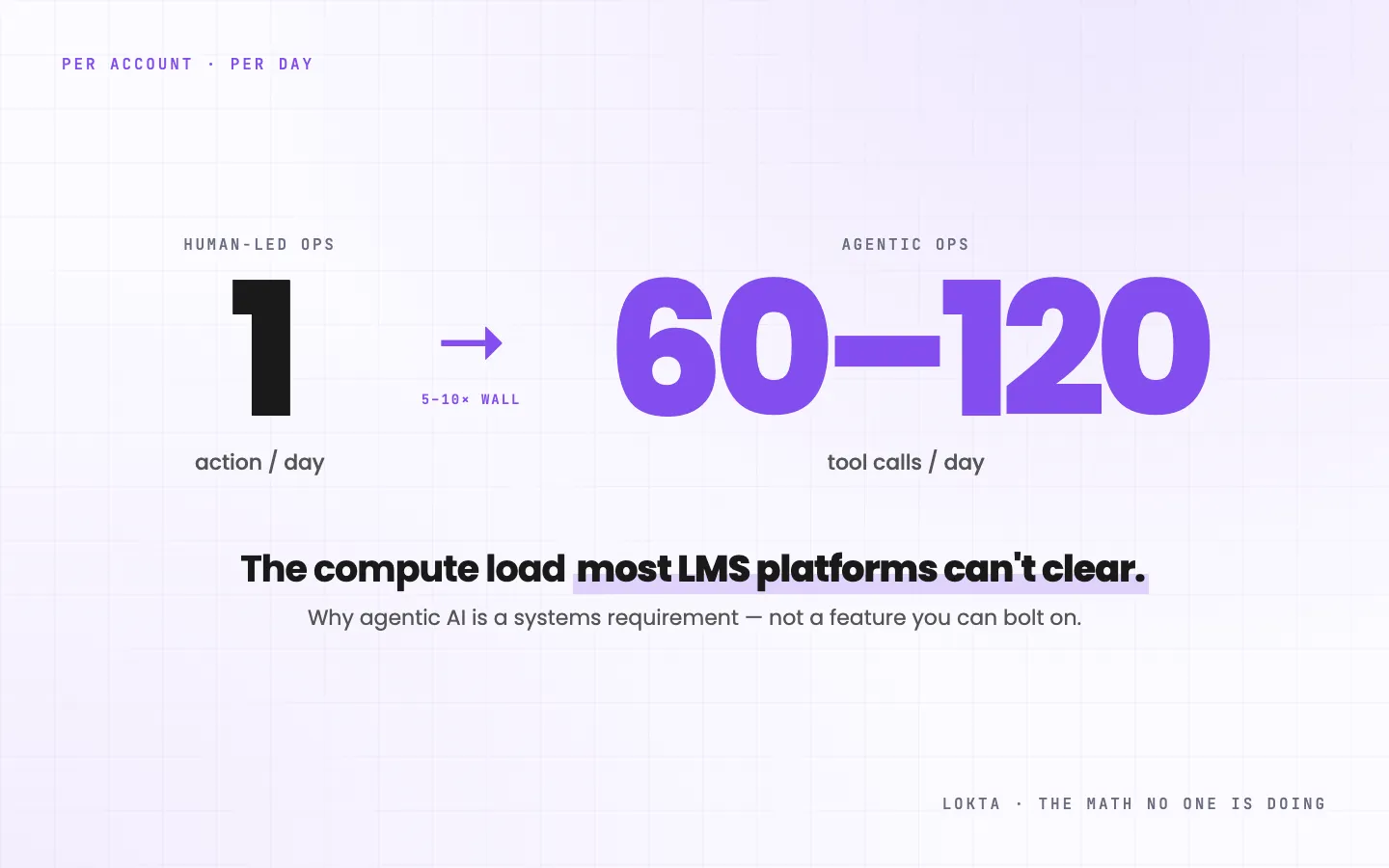
- Weekly MFI repayment style: typically 50–75× the number of disbursed loans in transaction volume
- Monthly consumer repayment: usually 6–24× the disbursement count
- Plus add-ons: penalties, prepayments, write-offs, restructures, journal lines per ledger event
If the ecosystem disbursed ~2B loans, the underlying transactional ledger volume runs into tens to hundreds of billions of repayment, accounting, and reconciliation events — silently, every week, on top of Apache Fineract and its descendants.
The diverse ecosystem of Fineract forks
A non-trivial share of the impact lives downstream — in named distributions and commercial derivatives that started from the Apache Fineract codebase or share its Mifos lineage. This is part of why the range stays wide.
- Mifos X — Most prominent; bundles the backend with dedicated UIs.
- Mifos Gazelle — DPI as a Service, integrates PH-EE and “VNext.”
- Mifos Mobile — Specialized forks for Android / staff engagement.
- Musoni System — Early cloud-MFI fork with high-automation focus.
- Finflux — Comprehensive global core banking platform.
- BaaSFlow Kenu — End-to-end LMS offered as a service.
- Fineract-Advancly — MSME debt-capital operations in Africa.
- Islamic Finance forks — Shariah-compliant Murabaha schedules.
- Fineract CN — (Archived 2023) Cloud-native microservices line.
- openMF / fineract — Primary community hub for microfinance features.
- Microservices repos — (Archived) accounting / customer domain forks.
Each of these has independently powered MFIs, NBFCs, neobanks, or community lenders. The volumes they collectively process are real but unreported by design — which is exactly why a single “official number” doesn’t exist.
Frequently asked questions
What is Apache Fineract?
Apache Fineract is an open-source core banking and lending platform maintained by the Apache Software Foundation. Originally born from the Mifos Initiative in 2006, it graduated to an Apache Top-Level Project on April 19, 2017. It powers loan management, savings, group banking, and accounting workflows for microfinance institutions, NBFCs, fintechs, and community lenders worldwide. In 2025, it was recertified as a UN Digital Public Good.
How much money has been lent through Apache Fineract and Mifos?
Our central estimate is ~$500B — half a trillion dollars — in cumulative loan principal disbursed through the Mifos → Apache Fineract ecosystem from 2006 through early 2026. That sits inside a defensible base-case range of $300B–$600B, and a full plausible range of ~$150B (conservative) to ~$1T (high). The wide outer range reflects the fact that private forks and “powered by” derivatives don’t publicly report volumes; when the long tail of MFIs, BNPL platforms, and fintechs running Fineract code worldwide is taken into account, half a trillion is the closest single defensible figure.
How many loans have been disbursed through Fineract?
Hundreds of millions to roughly 2 billion individual loan disbursements over the ecosystem’s life, depending on average ticket-size assumptions ($300–$900 per loan). At the transactional ledger level — including repayments, prepayments, and accounting events — the underlying activity is far higher: weekly-repayment microfinance products generate 50–75× the number of transactions per loan, putting total ecosystem ledger events in the tens to hundreds of billions.
Why isn’t there an official number?
Apache Fineract does not collect telemetry from production deployments. Many of the largest users run private forks. Public Mifos client counts include both depositors and borrowers, and many institutions use the platform for savings or accounting rather than lending. So no single authority — neither Apache, Mifos, nor any vendor — sees the full picture.
What’s the difference between Apache Fineract and Mifos?
Mifos is the broader open-source initiative and community (started 2006); Apache Fineract is the platform itself, donated to the Apache Software Foundation in 2015 and graduated as a top-level project in 2017. Mifos X, Mifos Gazelle, and Mifos Mobile are downstream distributions that bundle Fineract with UIs, mobile apps, and integration layers.
Which institutions use Apache Fineract?
Mifos publicly reports 500+ financial institutions across 70 countries and 65M+ clients reached through the ecosystem. Adopters include microfinance institutions (MFIs), non-banking financial companies (NBFCs), neobanks, cooperatives, NGOs, and digital lenders. Notable named distributions include Musoni System (cloud MFI), Finflux (core banking), BaaSFlow Kenu (LMS-as-a-service), and Advancly (MSME debt-capital in Africa).
How was the $500B central estimate calculated?
We applied three conservative ranges to the public Mifos client base: an active-borrower ratio of 30–60% of clients, a blended outstanding ticket size of $400–$1,200 per active borrower, and portfolio turnover of 1.5–2.5× per year. We rolled the annual volume backward across the 2006–2026 window using a ramp-up curve that reflects ecosystem growth, then cross-checked the implied scale against global microfinance baselines (about $195B GLP and 142M borrowers in 2023). The result is a base-case range of $300B–$600B; approximately $500B is our central estimate within that range, reflecting the structural under-counting of private forks and unreported deployments.
Help improve the impact story
Precision requires participation. If you operate on Apache Fineract, Mifos X, or any of the named distributions above — and you’d contribute anonymized scale data (clients, borrowers, disbursement volume, transaction counts) — the global story of open-source financial inclusion gets sharper.
We’re tracking what a useful, privacy-preserving voluntary reporting effort could look like. Get in touch if you’d like to discuss methodology, contribute data, or challenge our assumptions.
Disclaimer: This analysis is based on Lokta’s independent research and public information. The figures shared are estimates and are provided for informational purposes only; Lokta does not guarantee their accuracy or completeness. Lokta is not currently affiliated with, endorsed by, or acting on behalf of the Apache Fineract or Mifos communities.
Sources cited include: mifos.org (ecosystem footprint), fineract.apache.org (Apache project history), and published microfinance sector reports (global GLP and borrower baselines, India microfinance figures).