The Agentic Loan Servicing Platform: One platform for the live book
Lokta puts the Loan Management System (LMS), loan accounting, servicing and collections in one governed platform.
For banks, NBFCs, fintech lenders and LSPs.
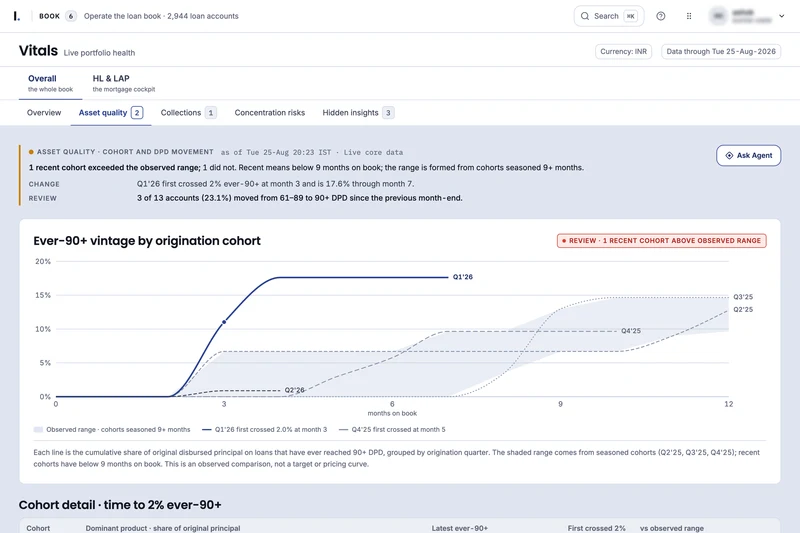
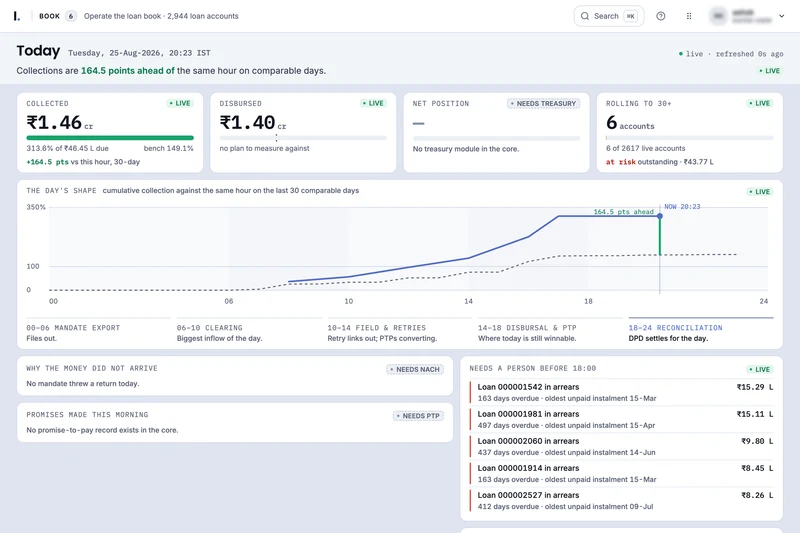
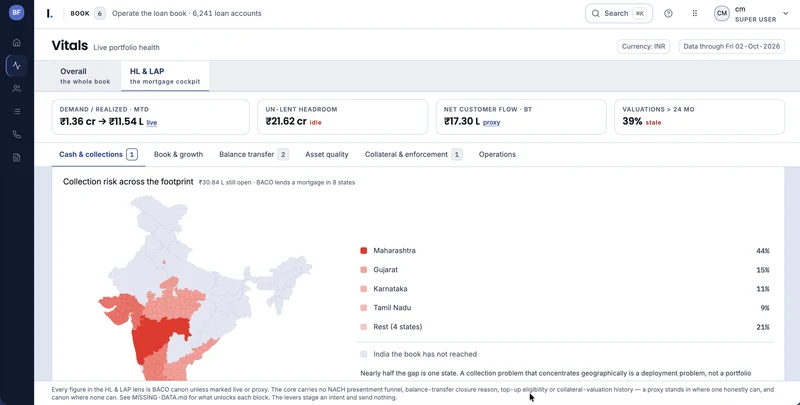
Today
From the team behind Apache Fineract.Meet the team
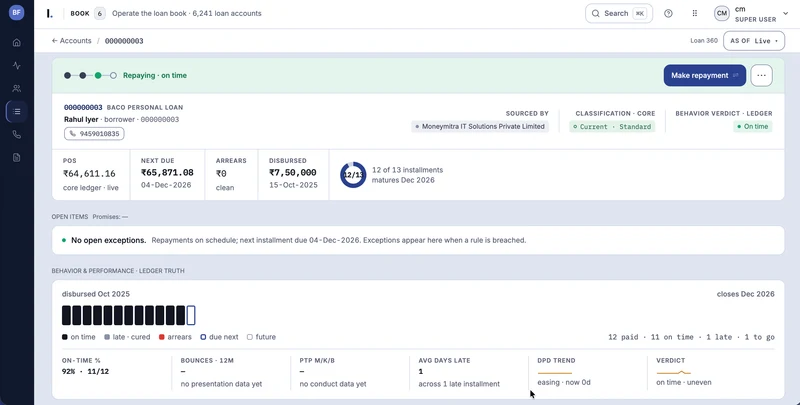
Every app works from the same loan record.
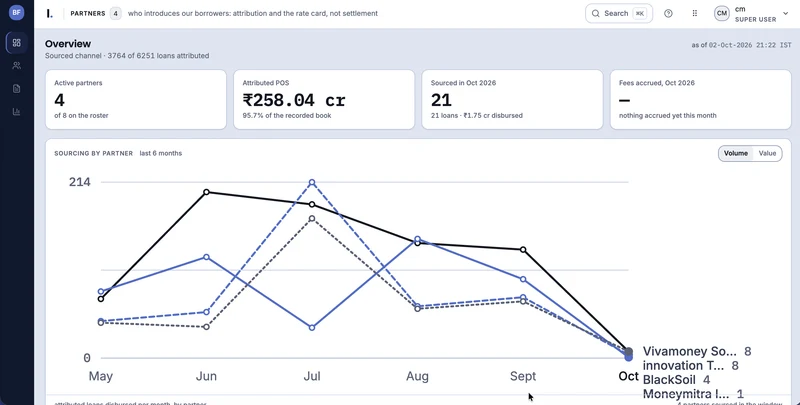
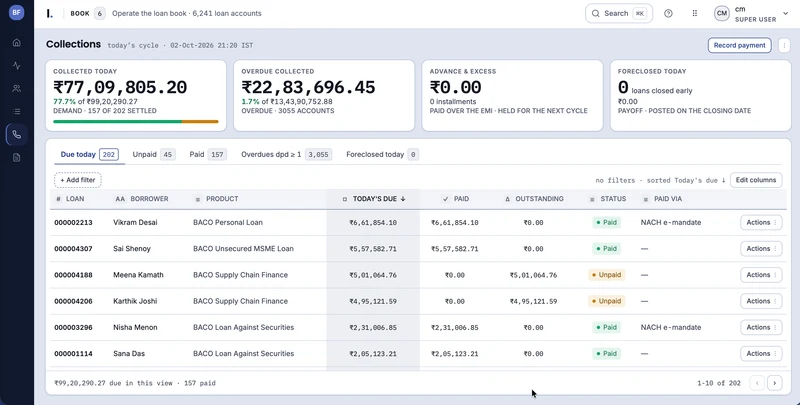
Loan management, accounting, collections and lending partners, connected in Lokta so your teams see the same facts.
- Loan Management System (LMS)
Schedules, dues, balances and the repayment history of each loan.
- Loan Accounting
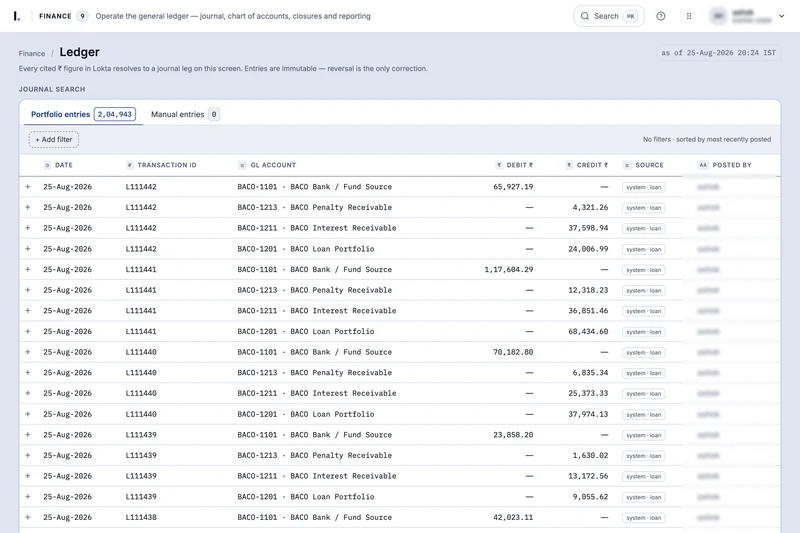
Interest, fee and repayment entries, each traced to its loan transaction.
- Lending Partner Management
Partner onboarding, activity analysis, monthly payouts, invoices and approvals.
- Loan Product Studio
Configure terms, charges and repayment rules, and test them before activation.
- Collateral Management
Assets, valuations and documents, tracked through the life of a loan.
- Collections and Recovery
Overdue accounts, promises to pay, follow-up queues and recovery records.
- Bureau Reporting
Loan and repayment data for bureau reports, with formats and submission scoped to your setup.
- Integrations
Payment gateway, LOS, finance and channel connections, tested for your deployment.
- Reporting and Analytics
Portfolio, repayment and overdue reports, plus partner performance analysis.
- AI Loan Support
Borrower queries and servicing follow-ups, with resolutions proposed within lender policy.
What lenders said
After the portfolio dashboards
“This kind of concise and clear dashboard I never saw.”
At the end of the demo
“You have covered all the pain points of a growing NBFC.”
On why Lokta starts after sanction
“The post-sanction area is the one which still today remains a grey area.”
On hearing the rate, ₹1,000 per crore of book a month
“It's a reasonable price.”
On the partner and payout view
“Traditional systems never had something like this.”
On seeing bucket roll-back and roll-forward at account level
“My team takes half a day today just to get this data out manually.”
Asked when he wanted servicing automated
“At this point, I can start within a month.”
Profit per loan disbursed.
Servicing, collections and recovery shape what each loan earns after approval.
- 01
See the whole book every morning.
See repayments, overdue accounts and cases needing attention on one record.
- 02
Agents work the routine cases.
Route payment queries, mandate follow-ups and promises to pay inside your policy limits.
- 03
Test the next policy.
Test changes to servicing and collections policy before your team puts them into use.
For operations teams: ten evidence checks to run before you close a payment exception. Get the free editable checklist
Lokta Next 100: no platform fee for up to 24 months.
Loan management, collections and reporting for eligible lenders in any market.
For lenders with assets up to ₹100 crore (about USD 10 million) at enrolment. No platform fee while AUM stays within the cap during the free term. Pure-play microfinance is excluded. Read how it fits small lenders and new lenders.
- AUM at enrolment
- Up to ₹100 cr
- Platform fee for 24 months
- ₹0
- Per month on AUM after the free term
- 1 bps
AI proposes. The core decides. The record proves it.
Agents propose actions. Your policy and required approvals govern changes to the book.
- Proposed
The agent reads the loan and proposes a mandate follow-up and a reminder to the borrower. Nothing on the loan changes yet.
- Checked
The core checks the proposal against your collections policy. It is inside your limits, so it goes ahead. A waiver above your limit would wait for an approver.
- Recorded
The proposal, the check and the outcome stay on the loan record for review.
Bring your book and your policy.
Start with a founder conversation, a programme application or a resource you can use today.
- Eligible smaller lenders
Lokta Next 100
Check the programme terms and apply for the next implementation window.
- Your book and policy
Talk with a founder
Discuss your operating needs and what an initial pilot should prove.
- Not ready to talk
Explore the resources
Use the benchmark, RFP toolkit or comparison guides.