MSME Secured Loan
- LTV cap
- 70% of market value
- Revaluation
- every 24 months
- Insurance
- you as loss payee
Collateral Management
See what backs each loan, where the documents are, and what needs attention next. Track valuations, LTV, custody and release deadlines across your live book.
One collateral core. Owners, value, LTV and deadlines work the same way for every facet, so a new kind of collateral is a new facet, not a new system.
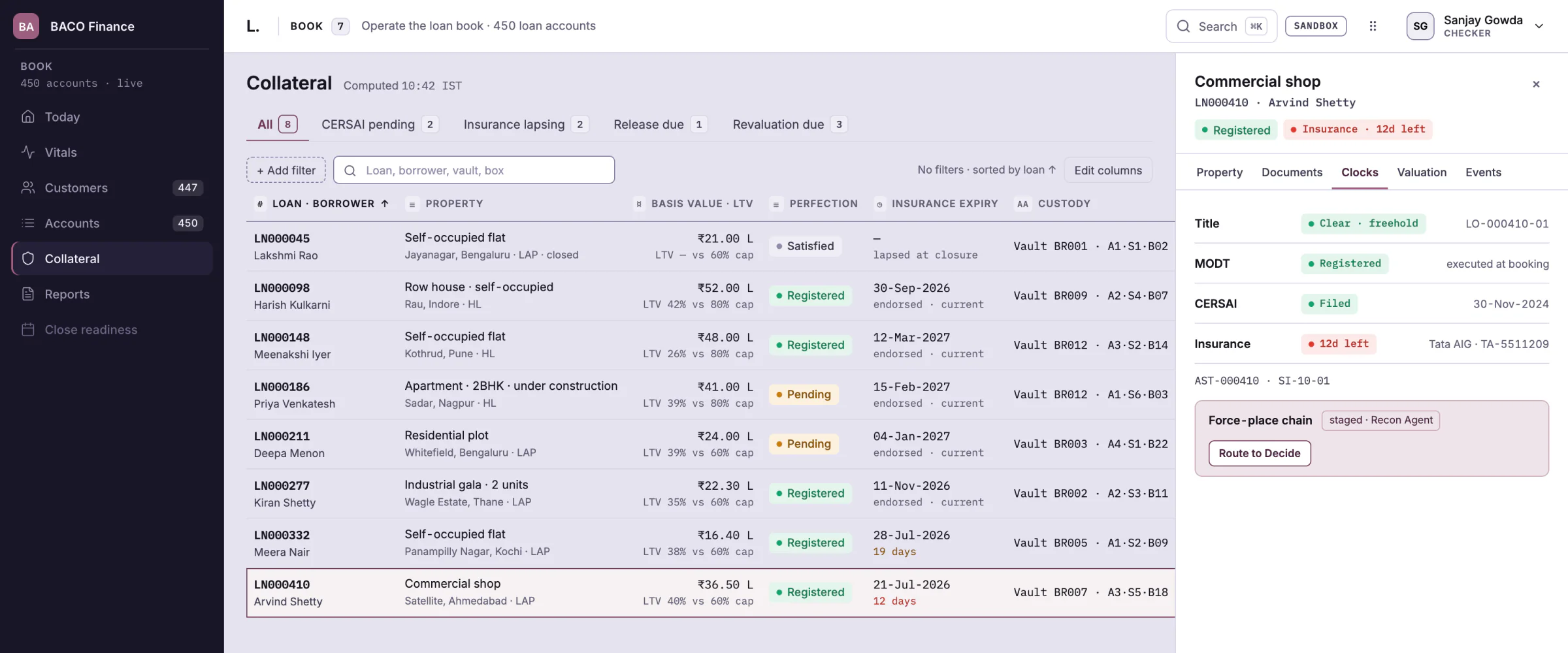
The collateral register
 1234
1234LTV and valuation
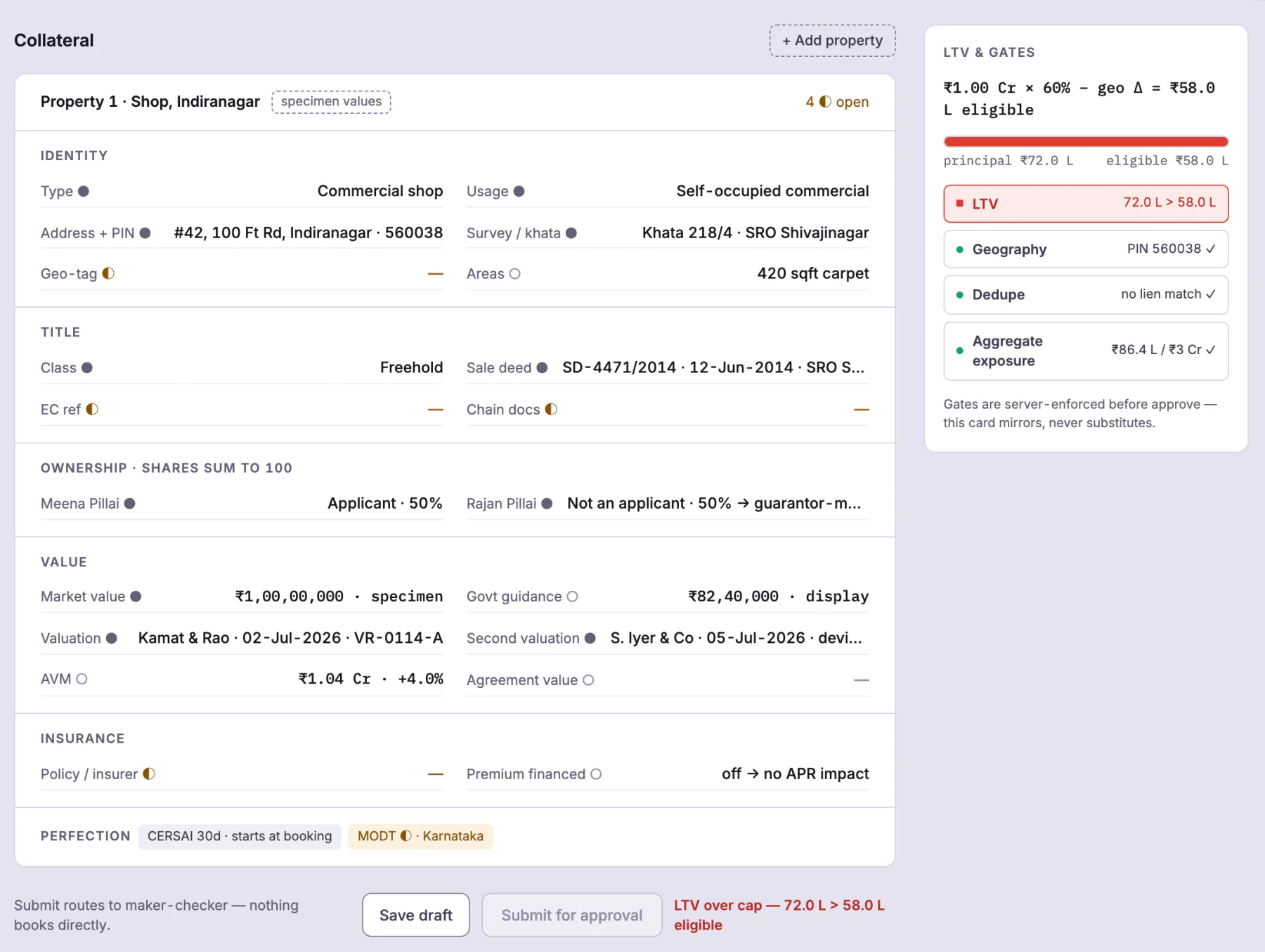
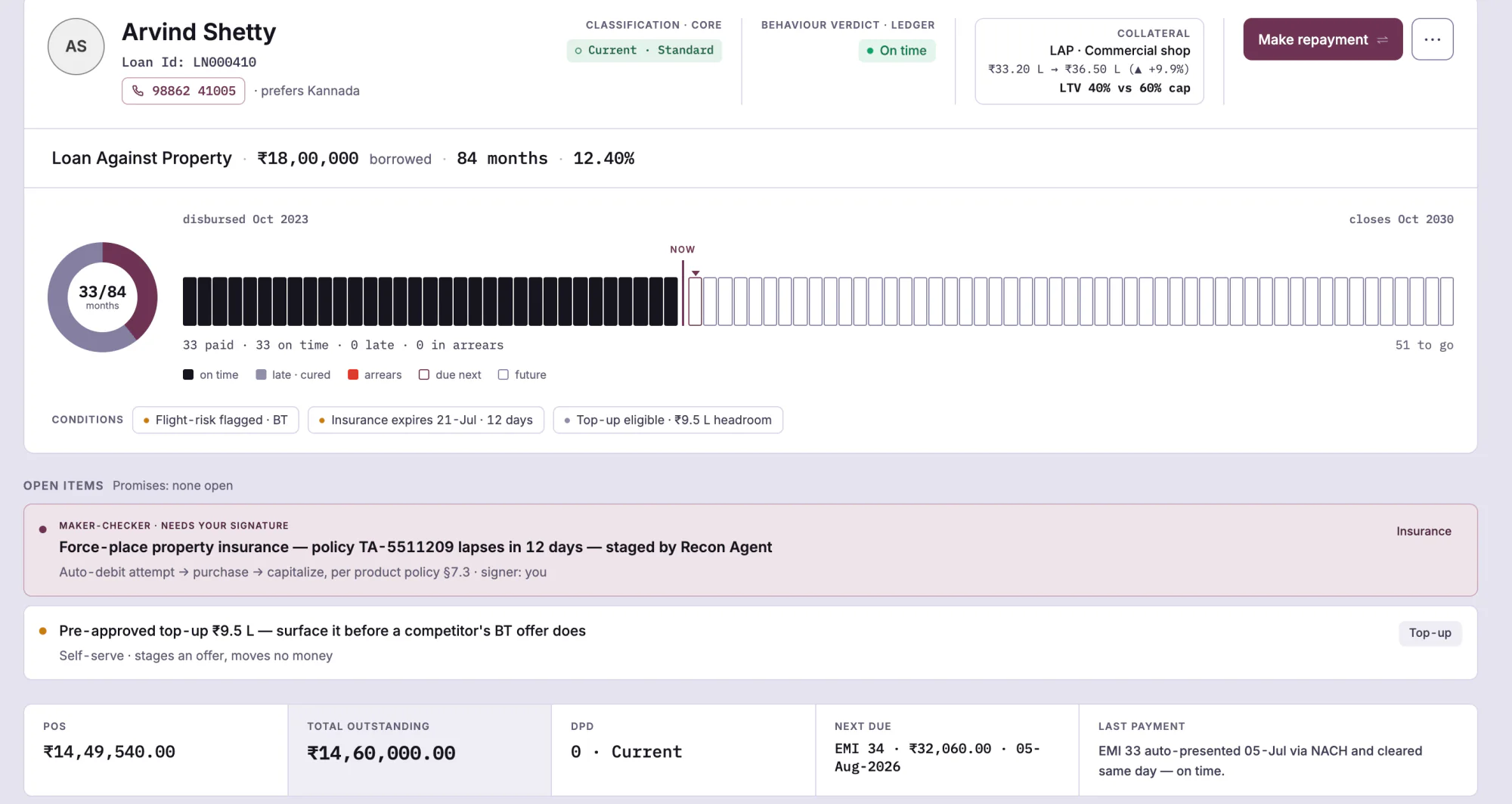
Compare eligible collateral value with the amount owed, using your policy. Supported market-linked assets follow configured price feeds; independently appraised assets follow your review schedule. Shortfalls become work for your team to review.
Illustrative policy check: ₹20 lakh of collateral at a 70% cap supports ₹14 lakh against ₹12.5 lakh outstanding. Operations, risk and collections work from the same collateral record.
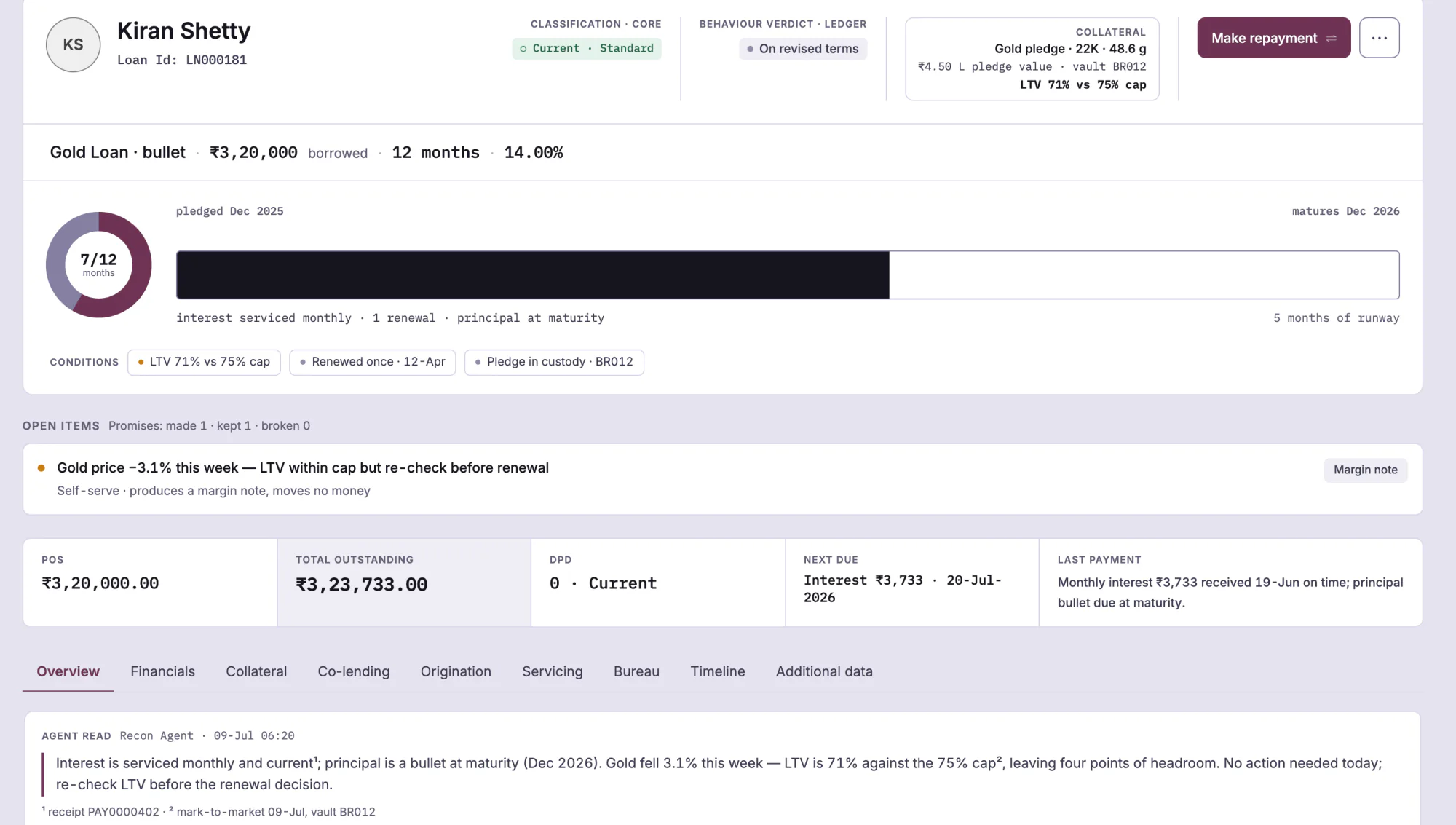
Illustrative gold loan: 44.6 g of 22K-equivalent gold, ₹2,90,000 outstanding and a sample 75% cap. Move the rate to see headroom become a shortfall.
LTV 68.6% against a 75% cap. ₹27,106 of collateral headroom for the lender to review. This is not a credit approval.
Your policy picks which one sets the limit. The valuer's report records both.
On the date your policy sets, or earlier when local prices move past a limit you choose, such as 5%, or when the borrower asks for a top-up.
₹33.20 lakh in 2024, ₹36.50 lakh in 2025. Both stay on file with the valuer and report number, and an index cross-check alongside.
For the CEO and CRO
The housing finance and LAP view shows LTV spread, stale valuations, cover under a price shock and enforcement progress across the whole book.
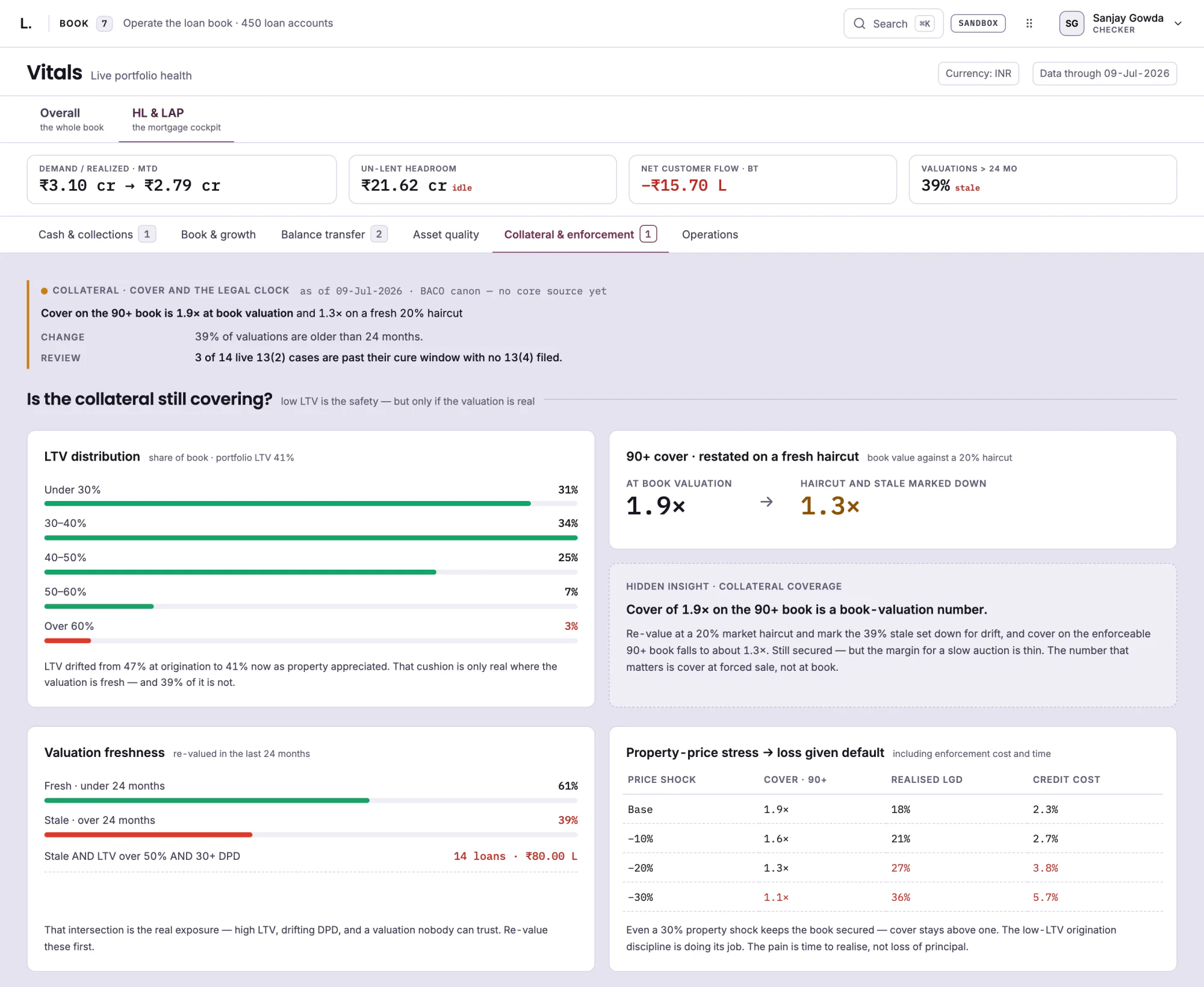
Demonstration data. Cover on the 90+ book: 1.9× at book value, 1.3× on a fresh 20% haircut. 39% of valuations are older than 24 months, and ₹21.62 crore of headroom sits unlent.
Deadlines and custody
Keep CERSAI tasks, insurance renewals, document custody and release deadlines with the loan. Your team sees the next action, its owner and the date it is due.
Keep the collateral record with title deeds, legal and technical reports, and encumbrance evidence supplied by your branch or LOS. Record identifiers for duplicate and lien checks.
Record the charge, prepare filing details and track registration status. Your team completes the registry filing and records its reference.
Originals sit at a known address, vault to box, with every movement logged. Shares, funds and deposits are held by a lien.
Monitor available values, LTV and upcoming deadlines. Schedule fresh appraisals and document reviews under your policy.
Named people approve the release. Track document return and charge satisfaction against the applicable deadline after repayment or settlement.
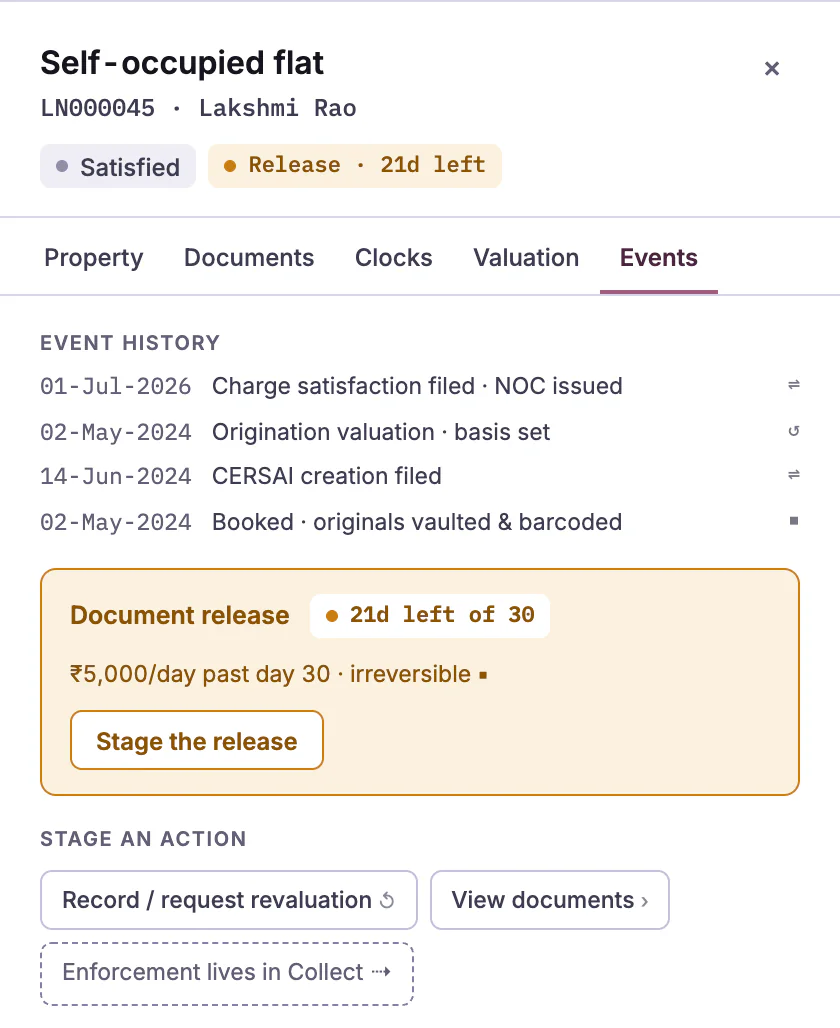
Regulatory context: RBI’s September 2023 document-release circular · SARFAESI Act, section 26D. Apply the rules relevant to your lender and loan type; the screen clocks and figures are illustrative.
Who it's for
A gold loan company with five hundred branches and a digital lender with none have different days. Pick yours.
Supported collateral
Property, gold, securities and specialist assets each need different evidence. Keep their valuation, custody and release records in one place, under your eligibility policy.
The secured loans most NBFCs run today.
Residential, commercial and industrial property, self-occupied or rented.
Ready homes and under-construction flats, including builder tripartite agreements.
Jewellery and coins, appraised piece by piece.
Cars, two-wheelers, commercial vehicles and tractors.
Plant, machinery, medical and construction equipment.
Bank deposits, and life policies with a surrender value.
Daily valuation and margin-call workflows, configured to your policy.
Listed shares held in demat.
Equity, debt and hybrid fund units.
Listed bonds, debentures and sovereign gold bonds.
Valuable, unusual and hard to fit in a system.
Paintings, sculpture and limited-edition prints.
Antiques, coins, stamps, watches and heirloom collections.
Tokenized securities and real-estate tokens, as regulation allows.
Eligibility and custody arrangements depend on your jurisdiction and policy; this is not a claim of a prebuilt custodian integration.
How it works
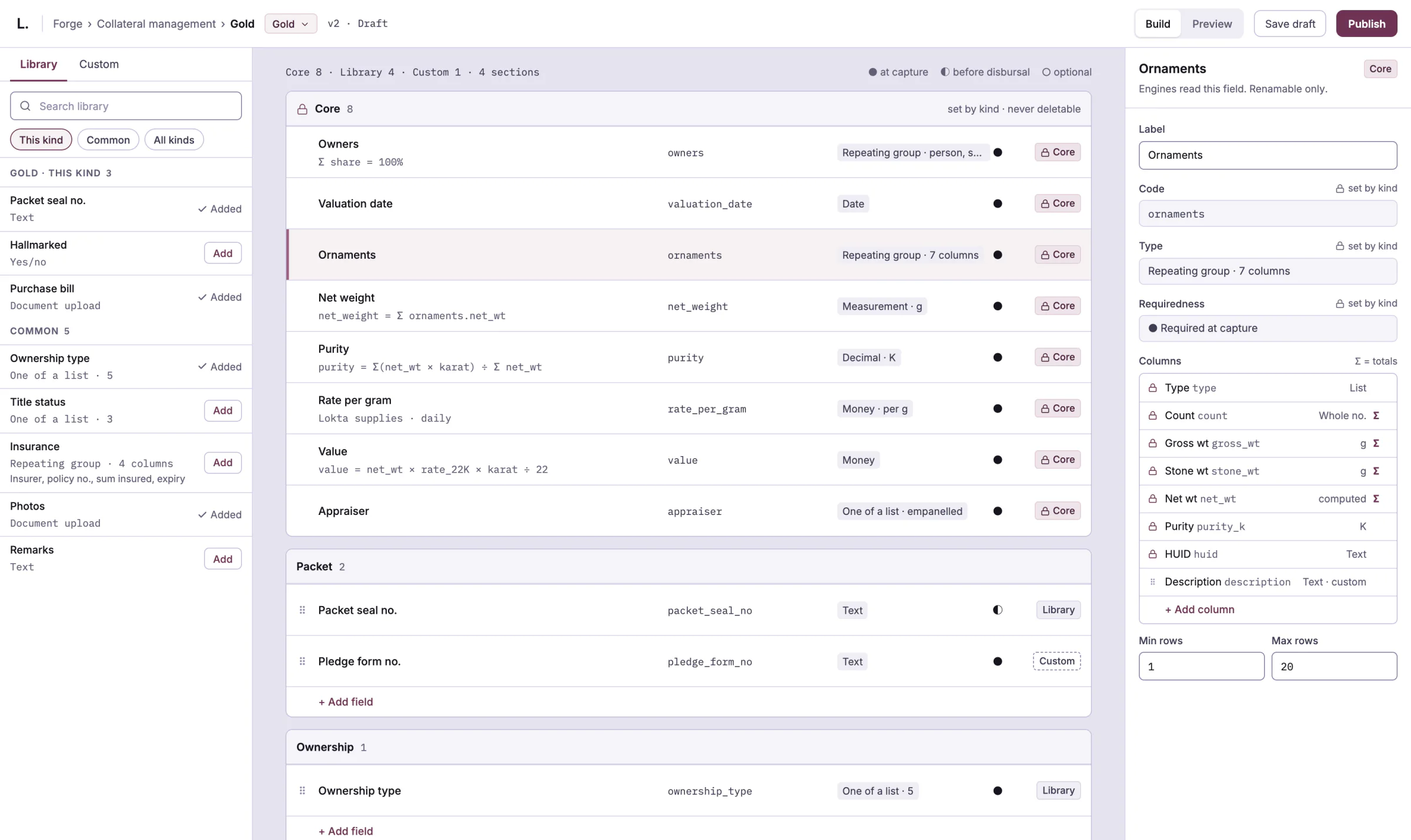
Pick the closest type and Lokta adds the fields it needs to value it. Add standard fields from Lokta's library, and your own for anything else. A checker approves before it goes live.
 1234
1234Value follows recorded weight, purity and your policy’s reference rate. The calculation stays linked to the recorded inputs.
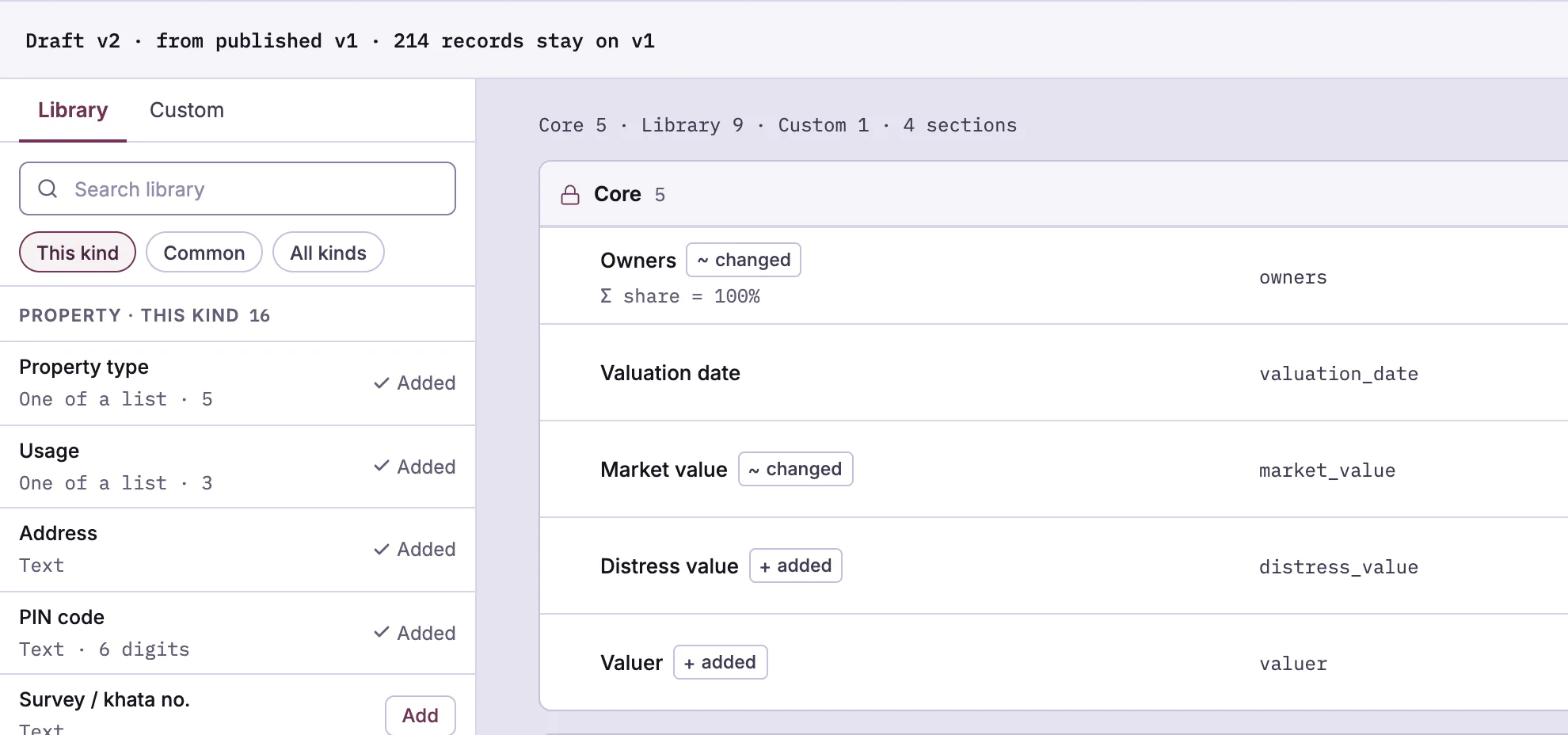
214 loans captured on version 1 stay on version 1. Every change is marked: added, changed or removed.
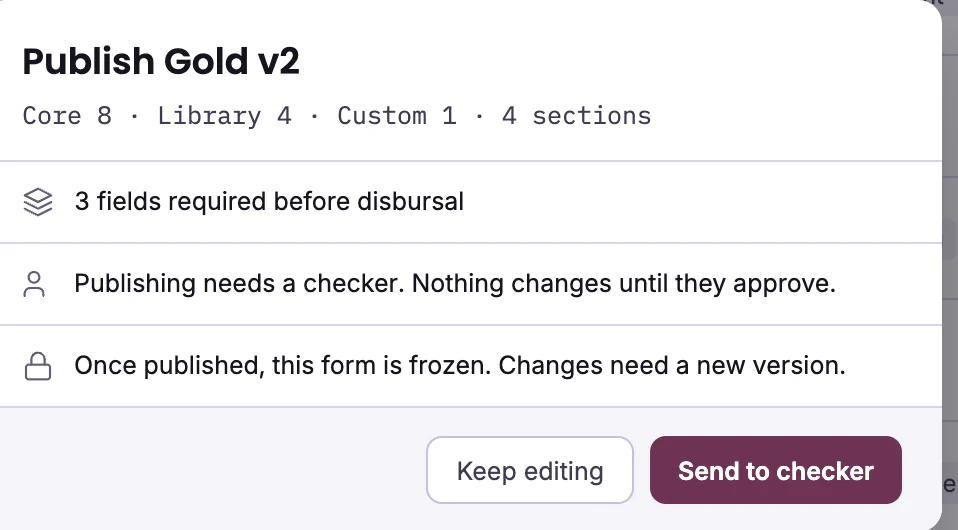
A second person approves each collateral type before publication. Pre-disbursal fields in this demonstration form describe an LOS handoff; they do not imply Lokta originates or disburses loans.
AI
AI helps prepare document fields, collateral set-ups and follow-up work. The deterministic core applies lender controls, with named approvals where required and a record of each change.
Sale deeds, title search reports, valuation reports, RC books and appraisal sheets become filled fields. Every value links back to the line it came from.
Describe the collateral in plain words. AI picks the type, adds standard fields and creates only what is missing.
Price moves, LTV breaches, insurance lapses and legal deadlines raise alerts with the next step already prepared.
Gold rate −3.8% at the open. 41 loans now above the 75% cap. Margin-call letters prepared.
preparedLN000410 · insurance lapses in 12 days. Renewal reminder prepared.
preparedLN000186 · CERSAI window has 23 days left of 30. Filing details attached.
preparedLN000277 · local property prices −6%. Revaluation request prepared for approval.
preparedExplore a read-only collateral query in an AI assistant. Connector availability, permitted fields and access controls are agreed for your deployment.
Sample data from BACO Finance, a demonstration lender.
Your demonstration
Three workflows to examine with demonstration data.
Follow a valuation change through to LTV and the next action.
Find a document deadline, its owner and the original’s location.
Walk a collateral release through its checks and approvals.
Audit and inspection
FAQ
Collateral management software keeps the assets securing your loans connected to their valuations, documents, custody records and release workflow. Lokta brings these records into the operating view of your live loan book.
The examples on this page cover property, gold and silver, vehicles, equipment, deposits, securities and specialist assets. Configure the fields and review process for your collateral types. Eligibility, valuation sources and custody arrangements follow your policy and the rules that apply to your lending business.
Not your LOS: it stays responsible for origination, underwriting, loan approval and disbursal, and Loan Origination on Lokta is on the roadmap. The loan book itself moves onto Lokta’s ledgers through a reconciled migration. We agree the data exchange, ownership of each record and integration scope for the systems around it.
Track registration and satisfaction tasks against configured deadlines, prepare filing details and record the reference after your team files. Tracking a task does not itself submit a filing or guarantee compliance.
Track the return deadline, document custody and named release approvals. RBI’s September 2023 circular specifies a 30-day period after full repayment or settlement for covered personal loans, with ₹5,000 per day compensation for delay attributable to the lender. Your team determines applicability and any exceptions.
Record the appraisal inputs for each item, including net precious-metal weight and purity. Calculations use the valuation method, reference prices and LTV limits in your applicable policy. The slider on this page uses a simplified sample loan and a sample 75% cap; it is not a lending recommendation.
Record holdings, pledge or lien status, valuation inputs and policy haircuts. Review margin shortfalls and part-release by units. Price feeds, registrar or depository connections and update schedules depend on the integrations agreed for your deployment.
Keep registration or serial numbers, invoices, hypothecation evidence and insurance with the collateral record. At closure, track the lender’s NOC and the relevant charge-removal documents.
Configure fields for provenance, authentication, condition, photographs and insurance. Record independent appraisals and custody, and track items separately where your policy requires it.
Any proposed asset type must fit the lender’s jurisdiction, eligibility policy, valuation method and custody arrangements. The catalogue is an example of record structure, not a statement that an Indian regulated lender may lend against every listed asset or that every integration is available.
AI prepares information and proposed work. The deterministic core applies policy checks, with named approvals where required. Read-only assistant access cannot change the collateral record.
Hosting location, access permissions and any AI data flows are agreed for your deployment. We will walk through those requirements alongside the collateral workflow.
Pricing depends on your book and implementation scope. Ask us about platform pricing, migration and integration costs, and whether your lender qualifies for the Lokta Next 100 programme. We will confirm eligibility and commercial terms with you.
Tell us what you lend against and which workflow you want to examine. We’ll use demonstration data to walk through the collateral record, policy checks and approvals.
Already using another loan management system? Bring that context. We’ll discuss the records, controls and integrations your workflow needs.