What is an AI loan servicing stack?
A guide to LMS, loan accounting, collections, lending partner management, reporting and integrations, with AI working inside lender policies and approvals.
Contents 9 sections
For an NBFC operations or finance team, a repayment has to reach more than the loan screen. The account balance must change, the accounting entry must be recorded, and collections must know which dues remain unpaid. A loan servicing stack connects the software behind that work.
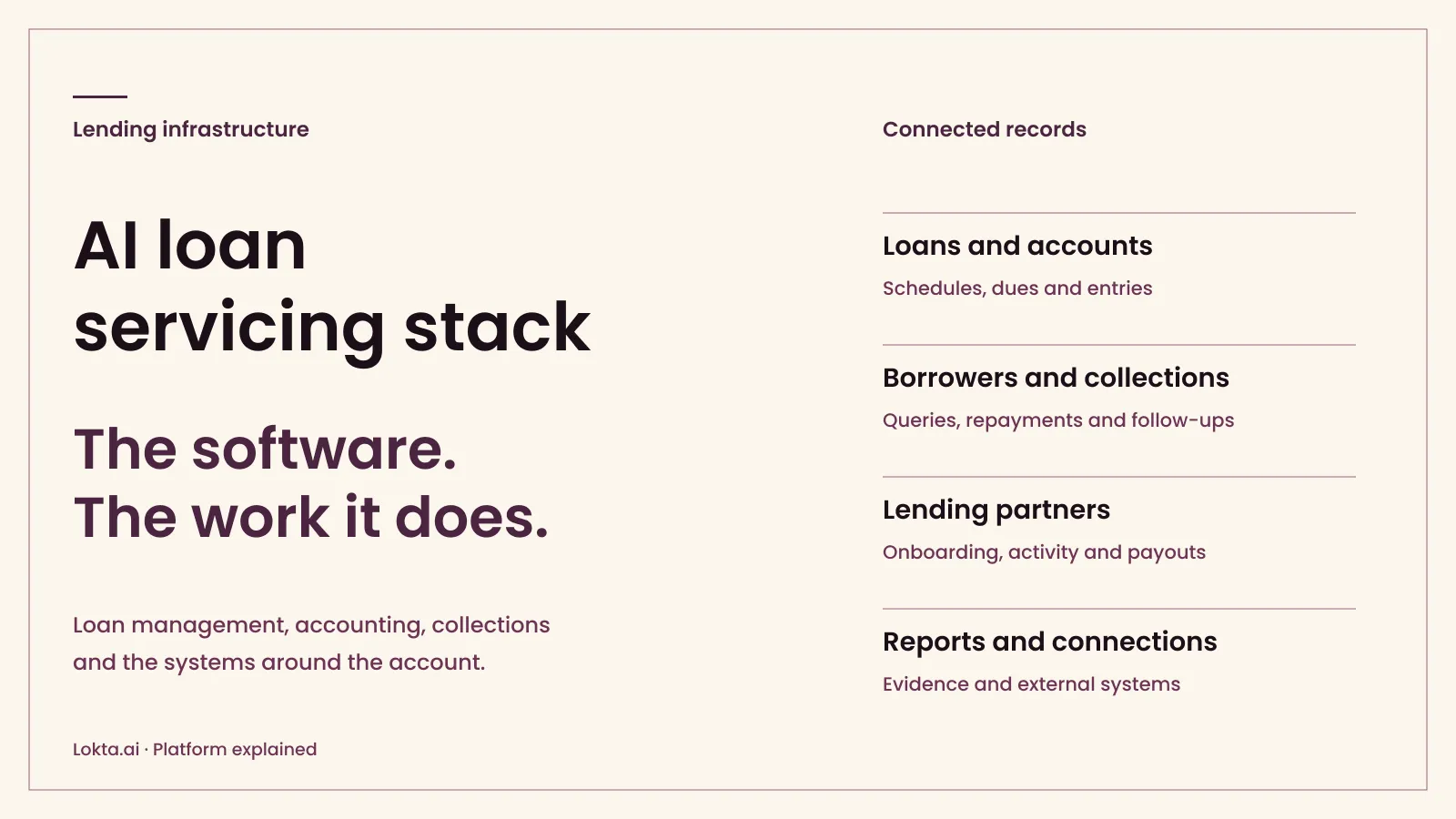
An AI loan servicing stack is the connected software used to manage loans after approval, with AI assisting servicing work inside lender policies and approvals. It includes a Loan Management System (LMS), loan accounting, collections, reporting and the supporting systems around the account. “Stack” means those systems work together; it does not mean every component is AI.
Lokta includes an LMS within its agentic loan servicing platform. The platform capability map shows the software included and links to each area in more detail.
- The LMS maintains the loan account. Accounting, servicing, collections and reporting use its records.
- Lending Partner Management connects onboarding and activity analysis to monthly payout records.
- AI assistance stays within lender policies, deterministic checks and required approvals.
- External connections need testing. Loan Origination remains a separate roadmap capability for Lokta.
The software behind the loan account
Each component answers a different operating question. The table explains Lokta’s scope in the language a lending team uses during the day.
| Software or capability | What it helps your team do |
|---|---|
| Loan Management System (LMS) | Maintain approved loan accounts, repayment schedules, amounts due, receipts and outstanding balances. |
| Loan accounting system | Record interest, fees and repayment entries, with the loan transaction behind each posting. |
| Collections and recovery | Allocate follow-ups, track overdue accounts, record promises to pay and keep a history of recovery work. |
| Lending Partner Management | Handle partner onboarding, partner activity analysis and monthly payouts, tied to agreements and attributed loans. |
| Reporting and analytics | Review the portfolio, repayments, overdue balances and partner performance from the records underneath. |
| Compliance workflows | Control access, require approvals and retain evidence for compliance and audit review. |
| Bureau reporting | Prepare account and repayment information for credit bureau reporting. Agree formats, validation and submission responsibilities during implementation. |
| Payment gateway integrations | Connect external payment services to repayment workflows. Test provider responses and reconciliation before live use. |
| Collateral management | Keep the assets securing loans, valuations and supporting documents connected to the account. |
| Loan Product Studio | Configure terms, repayment rules, charges and accounting mappings, then test the product configuration. |
| Integration hub | Exchange information with an external LOS, finance systems, bureaus and borrower communication services. |
| AI Loan Servicing | Assist with borrower questions, follow-ups and proposed resolutions inside the lender’s operating rules. |
| RBI Model Risk Management | Organise validation, monitoring and evidence for the team responsible for model risk. |
Loan accounting covers the loan’s financial entries. Confirm how those entries reach your enterprise finance system and which books each system owns. Likewise, a bureau reporting workflow needs an agreed submission process. Preparing data and confirming acceptance by an external bureau are different steps.
The integrations page describes the connection categories. A provider name, payment method or category on a map does not establish a working connection for your deployment. Name the provider, interface, owner and acceptance test in the implementation scope.
Follow one repayment through the stack
Consider an illustrative borrower payment against an instalment. Use test data to demonstrate this workflow; no customer outcome is being reported here.
- Receive and identify the payment. The payment connection provides the reference and status. The team can distinguish a successful receipt from a pending or failed attempt.
- Apply it to the account. The LMS uses configured allocation rules to update the relevant dues and balance. An unmatched receipt remains an exception for resolution.
- Record the accounting. The accounting system posts the entries associated with the accepted loan transaction. Finance can trace them back to that receipt.
- Update servicing and collections. The team checks the remaining dues before a further follow-up. A paid instalment should not stay in an unpaid queue because another screen has stale information.
- Carry the result into reports. Portfolio reports and the next applicable bureau reporting process use the updated account record, subject to validation and review.
Ask to follow the same payment reference through all five steps. The loan reconciliation guide explains the evidence needed when a payment record and the account disagree.
Lending partners belong in the operating record
Partner work continues after the loan is booked. A finance team needs to know which partner is associated with the account, which agreement applies, how the fee was calculated and whether the monthly payout has been approved and paid.
Lokta’s Lending Partner Management connects onboarding and diligence to agreement versions, loan attribution and partner activity analysis. Teams can examine the partner’s portfolio and compare performance. Monthly payout management links fees, invoices, approvals and payment records.
Changing a partner’s commercial terms should not silently rewrite the terms attached to older loans. For the month-end control, use the partner payout reconciliation walkthrough.
AI supports the work around the ledger
AI can help interpret a borrower’s question, gather the relevant account information and propose a follow-up or resolution. That assistance sits around the financial record. Configured rules determine schedules, allocation and accounting entries; required approvals govern changes.
In Lokta’s AI Loan Servicing, a proposed action passes through deterministic controls and the lender’s approval requirements. The record preserves the action and its basis for review. The lender retains accountability for its policies and decisions.
For a demo, choose a request that needs an approval. Ask to see the proposal, the policy check, the approval and the resulting record. A fluent response to a borrower is only one part of that demonstration.
Loan management and origination have different jobs
A Loan Management System maintains approved accounts through repayment and closure. A Loan Origination System (LOS) handles applications, underwriting and approval. A lender can evaluate an LMS while retaining a separate LOS. The LOS vs LMS comparison explains the responsibilities and handoff tests.
Lokta’s available capabilities are Loan Management, AI Loan Servicing and RBI Model Risk Management. Approved loans arrive from the lender’s LOS by API. Loan Origination is on the roadmap, with no published release date.
Loan Product Studio configures the product that will be serviced. Activating that configuration does not approve a borrower or originate a loan.
Ask to see the records connect
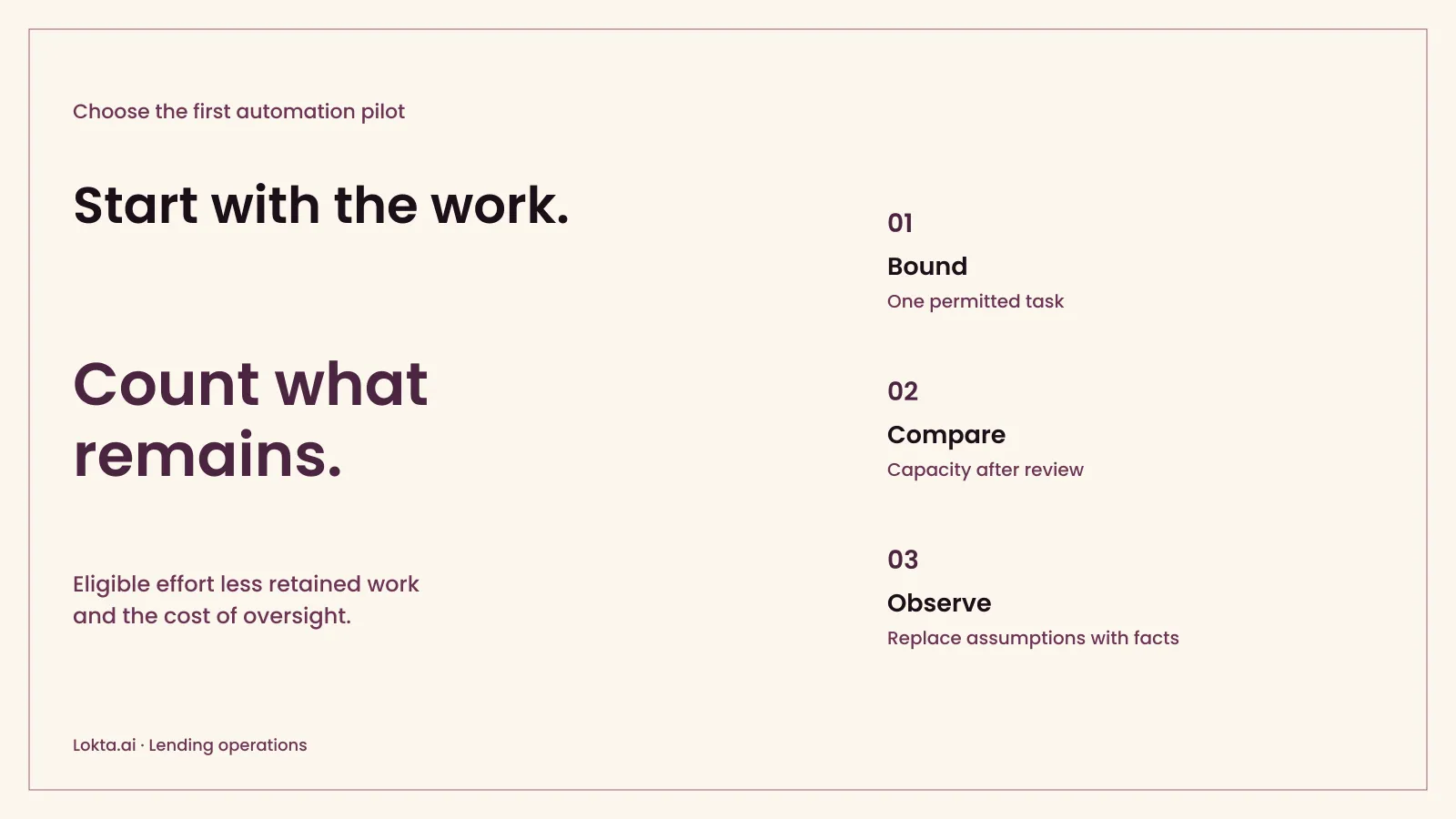
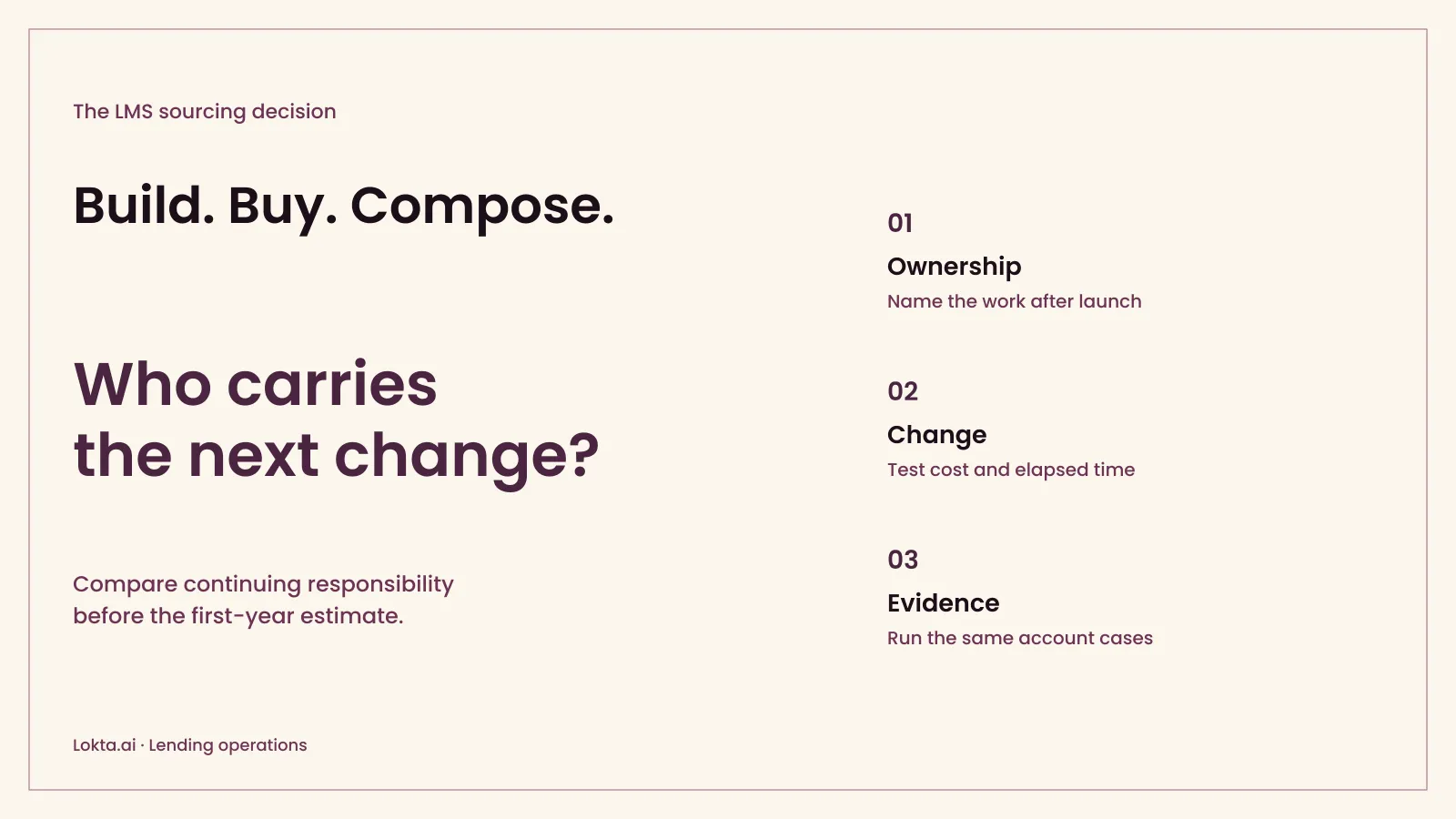
You can retain your current systems and repair the handoffs, consolidate the servicing work in a platform, or build and maintain the connections yourself. Compare those choices using the same test account and the same acceptance criteria.
For a platform evaluation, bring one repayment exception and one partner payout. Ask the team to trace the receipt to the loan and accounting entries, then the partner invoice to the applicable agreement and attributed accounts. Include an approval and a failed external response in the demonstration.
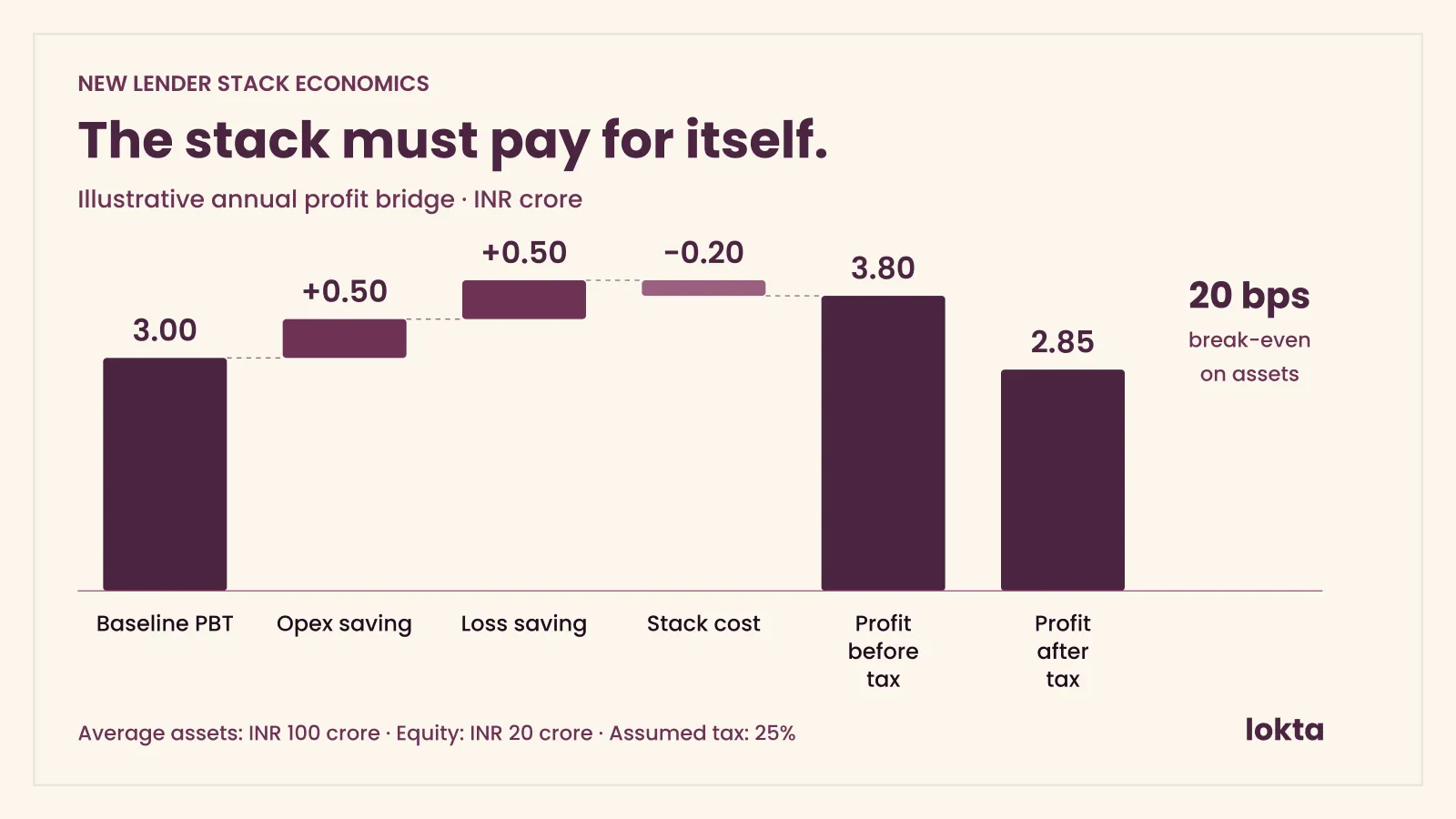
Consolidation still requires data mapping, provider configuration, reconciliation and lender review. The new-lender stack guide covers how to evaluate the operating costs alongside the software.
Talk to us about your loan book and partner workflows. Bring the records your team needs to reconcile at month-end.
Frequently asked questions
What is an AI loan servicing stack?
It is a connected set of software for managing loans after approval: loan accounts, accounting, borrower service, collections, partners and reporting. AI helps with servicing tasks inside lender policies, with required approvals controlling changes to the account.
Does Lokta include a Loan Management System?
Yes. Loan Management is available now in Lokta, alongside AI Loan Servicing and RBI Model Risk Management. The platform includes loan accounting, collections, Lending Partner Management, reporting, collateral management and Loan Product Studio, with external connections scoped for each deployment.
What does Lending Partner Management cover?
It covers onboarding partners, analysing their activity and managing monthly payouts. The partner record connects agreement terms and attributed loans to portfolio performance, fee calculation, invoice approval and payment records.
Does loan servicing software include loan origination?
Loan servicing and origination are different functions. An LOS handles applications, underwriting and approval; an LMS maintains approved accounts through repayment and closure. Lokta accepts approved loans from an external LOS. Its own Loan Origination capability is on the roadmap, with no published release date.
Read next
- Evaluate the economics of a new lender’s stack
- Trace a partner payout back to its agreement and loans
Sources and product detail
- Lokta platform and capability map
- Loan Management specification
- Lending Partner Management
- Integration scope and acceptance
- Collateral management
- RBI Model Risk Management
Lokta editorial analysis by Chandramouli, co-founder and CEO.