NACH or UPI AutoPay bounce: the lender's first 72 hours
What an NBFC should do in the 72 hours after a NACH or UPI AutoPay debit bounces: post the return, read the reason, reach the borrower and beat the bureau date.
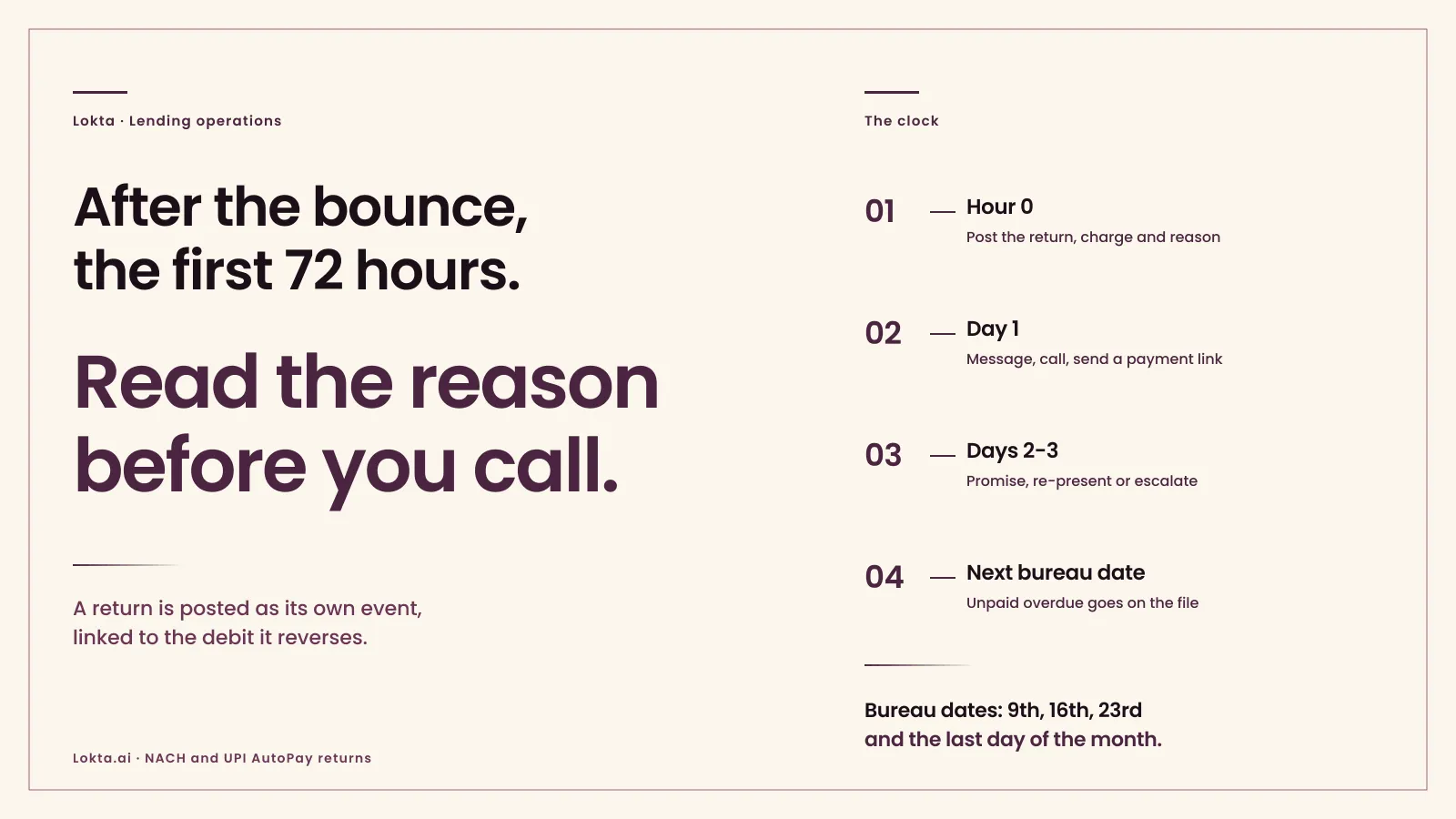
In the first 72 hours after a NACH or UPI AutoPay debit bounces, a lender should post the return against the original debit, read the return reason, apply any bounce charge as a separately disclosed penal charge, reach the borrower within permitted hours with a way to pay, and decide on re-presentation within the rail’s limits. Unpaid overdue reaches the credit bureaus on the next reporting date.
If you run payment operations at an NBFC, the return file is the first thing your team reads each morning, and on a mandate-led book it is the first sign of stress you get. The next three days are when a one-off miss is easiest to cure.
When every return is treated alike, the same message goes to the borrower whose bank failed the debit and to the borrower who cancelled the mandate. Charges get posted before anyone reads the reason. The account then reaches the credit bureau as overdue before anyone has offered the borrower a way to pay. Each return deserves a short, ordered sequence driven by the reason the rail gives.
- Post the return as its own event. Link it to the debit it reverses and keep the rail’s reason on it.
- The reason decides the next step. Insufficient funds, a cancelled mandate and a technical failure each need a different response.
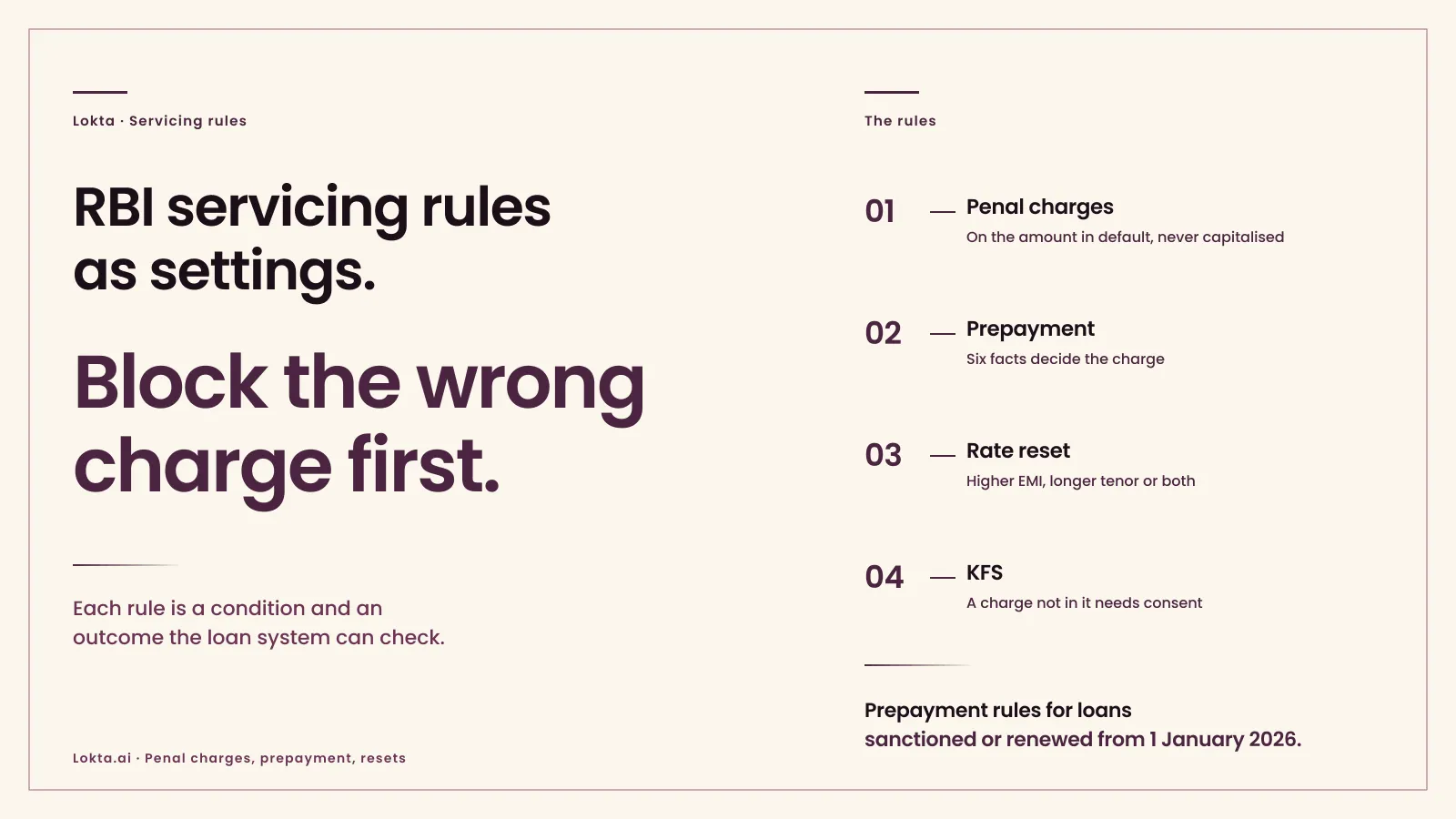
- Bounce charges follow the penal charges rules. Levy it only on the amount in default, disclose it in the KFS, post it as its own line and never capitalise it.
- Contact stays inside the rules. Recovery calls only between 8 am and 7 pm, with no persistent calling, intimidation or harassment.
- The bureau date is close. With four reporting dates a month, an unpaid instalment can be on the file within a week.
What happens in the first 72 hours after a bounce?
NPCI runs NACH debit returns in same-day sessions, and since 1 July 2026 a NACH debit settles only when the payer’s bank confirms it or is deemed to have accepted it, not at presentation. The clock below starts when the return reaches you.
The volume is large. In August 2026, NPCI’s figures for NACH debits in its recurring payments category show 4.82 crore returns against 19.36 crore presentations, about one in four. That count covers every return reason and every payer type, and it counts a re-presented debit each time it is presented, so it is not a loan bounce rate. It does show how routine returns are.
| When | What the lender does | Who owns it |
|---|---|---|
| Return received | Post the return against the debit and attach the reason code | Payment operations, through the loan system |
| Same day | Sort returns by reason, post a bounce charge only where the reason shows a borrower default such as insufficient funds, and message those borrowers with a payment link | Collections |
| Days 1-2 | Call where the message went unanswered, record any promise to pay, start a new mandate where the old one is gone | Collections |
| Days 2-3 | Re-present where the rail and the promise allow it, or move the account to the next treatment | Payment operations and collections |
| Next reporting date | Report the account as it stands, so an unpaid instalment goes to the bureaus as overdue | Credit reporting |
The timings in the table are a working pattern. Your own policy sets the actual hours.
What does the return reason tell you?
Which step comes next. NACH returns carry a reason code. NPCI’s 2018 list gives code 04 for “Balance Insufficient”, and separate codes for a closed account, a mandate the payer’s bank has not received and other failures. The reasons fall into three groups:
The mandate works and the money was not there. Message the same day with a payment link, then ask when funds will be in the account before presenting again.
The account is closed, the mandate has expired, or the payer’s bank has not received it. A closed account needs a new mandate. An unreceived one can go again only after it is registered. Meanwhile the borrower needs another way to pay.
Check with the sponsor bank before contacting the borrower, and hold any bounce charge until the bank confirms the cause. The instalment is still unpaid, and the account still counts as overdue until it is.
The code says why the debit failed. Whether the borrower means to pay comes out in the first contact. Returns the borrower asked for, such as a payment stopped by the account holder, can signal a dispute: send those to a person before any charge or re-presentation.
How should the return be posted?
As a new event linked to the debit it reverses. Since a NACH debit now settles only on the payer bank’s confirmation or deemed acceptance, a presented debit is not yet a receipt. Where a loan system books a receipt before the debit is confirmed, the return reverses it with a compensating entry that keeps the original posting, the reason and the time. Deleting the receipt would lose all three. The loan reconciliation guide covers the matching and control totals behind that step.
The account is overdue from the due date whatever the reason for the return. Under RBI’s classification rules an NBFC account with any amount unpaid on its due date is SMA-0 from the first day, and the days past due keep counting until the arrears are cleared. The SMA and NPA classification post sets out the bands and the day-end run that assigns them.
What can you charge for a bounce?
What the loan agreement and the Key Facts Statement disclose, applied under RBI’s penal charges rules. For NBFCs those rules now sit in paragraph 30 of the Responsible Business Conduct Directions, 2025, carried over from the August 2023 circular on penal charges. They reach any charge for breaking a material term of the loan, and similar charges “by whatever name called”, so a bounce charge falls under them whatever the product calls it. The rules say:
- a penal charge is levied only on the amount in default, and never on earlier penal charges
- it is not capitalised, so no interest runs on it
- the unpaid instalment itself carries interest only at the contracted rate until it is paid
- the amount is reasonable and in proportion to the breach, and an individual borrower pays no more than a non-individual borrower would for the same breach
- the charge is disclosed in the loan agreement and the Key Facts Statement
- any reminder for the default states the penal charges that apply
Post the charge as its own line, dated the day of the return, with the product rule that allowed it. A borrower who calls to ask why the amount due went up can then be answered from the record. The same rules, with the prepayment and rate reset rules beside them, are set out as loan system settings in penal charges, prepayment and rate resets.
What should the borrower hear, and when?
A short message the same day, then a call if the message goes unanswered, all inside RBI’s conduct rules. For NBFCs, paragraph 100 of the Responsible Business Conduct Directions rules out recovery calls before 8 am or after 7 pm, calling a borrower persistently, and any intimidation or harassment. Because the penal charges rules require it, the first reminder should state the charge that applies.
The message should make paying easy: the amount, the reason the debit failed if the rail gave one, and a payment link. For a borrower whose mandate is gone, the message also asks for a new one. Record every attempt, the channel and the answer. A promise to pay with an amount and a date is the most useful thing the first contact can produce.
When can you present the debit again?
NACH turns on the return reason. UPI AutoPay caps the number of tries.
NACH re-presentation rules
NPCI’s 2017 circular on re-presentation says a debit returned because the account is closed should not be presented again, and one returned because the mandate was not received can be presented only after the mandate is registered. From the third presentation of a debit returned for a closed account, NPCI charges the presenting bank a ₹25 penalty for each presentation. NPCI’s public circulars set no count or gap for re-presenting a debit returned for insufficient funds, so the limit comes from your sponsor bank’s arrangement and your own policy. Presenting again before the borrower has funds adds another return to the record and, if your product charges per return, another charge.
UPI AutoPay retry rules
NPCI allows at most one attempt and three retries per mandate for each debit, run outside peak hours (10 am to 1 pm and 5 pm to 9:30 pm). Each debit needs a pre-debit notification to the payer at least 24 hours ahead. UPI apps do not have to offer pause or revoke on mandates in the loan payments and EMI collection categories, though the borrower’s bank must still let the borrower skip a debit or revoke the mandate. Under RBI’s e-mandate framework, a recurring UPI debit above ₹15,000 needs the payer’s extra authentication. The ₹1 lakh exception covers insurance premiums, mutual funds and credit card bills, and loan repayments are not on that list.
The best time to present again is after the borrower has said the money is there. A promise to pay with a date gives you that.
When does a bounce reach the credit bureau?
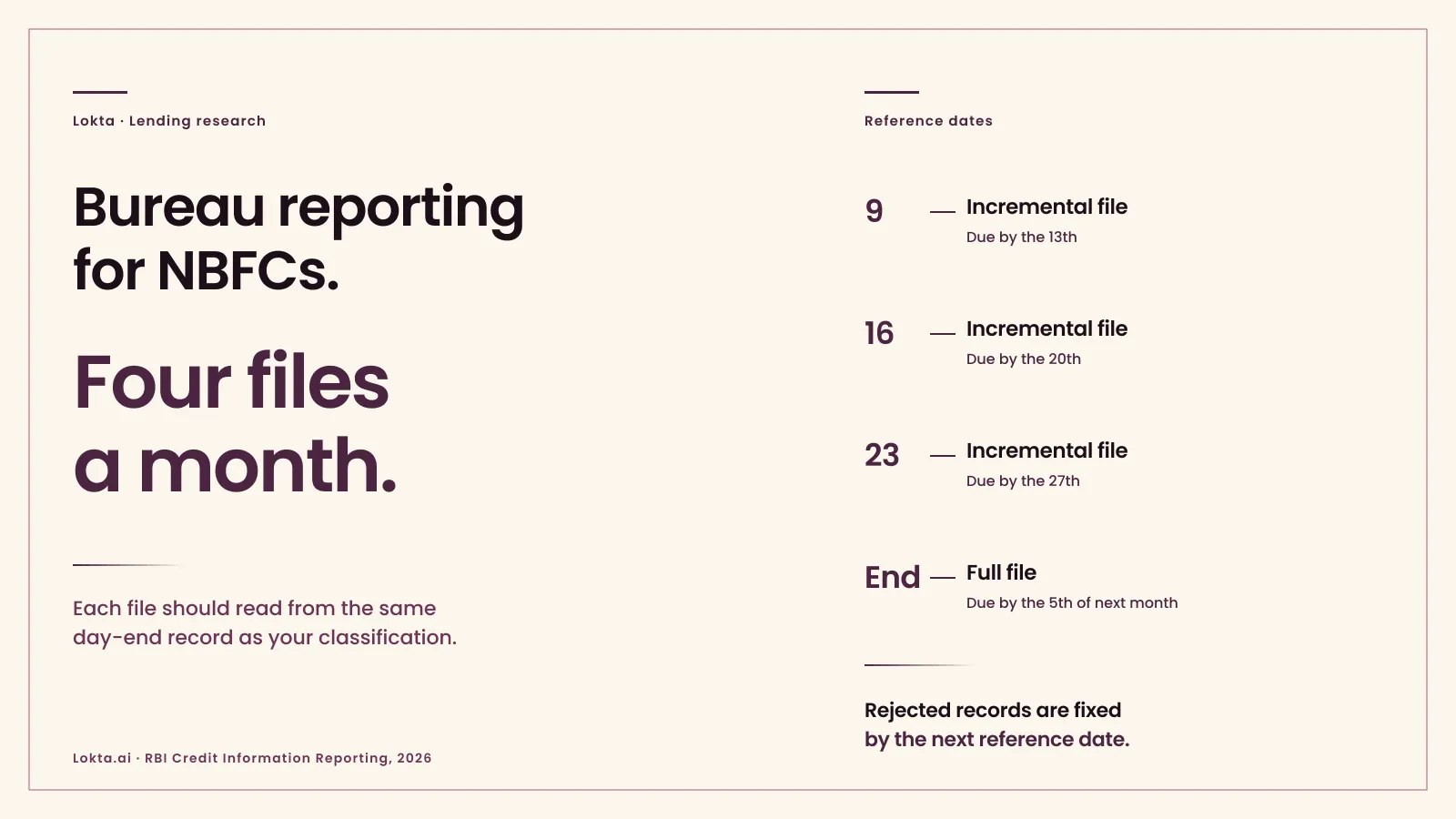
On the next reporting date. The four reference dates each month, the 9th, 16th, 23rd and month end, have applied to NBFCs since 1 July 2026. An instalment due on the 5th that bounces and stays unpaid will be in the file as on the 9th as overdue, and the borrower’s credit report will show it.
That makes the first days after a bounce the cheapest time to cure it, for the borrower as well as the lender. The credit bureau reporting post covers the deadlines, rejections and corrections that follow.
Does a bounced mandate have legal consequences?
It can. Section 25 of the Payment and Settlement Systems Act, 2007 treats an electronic funds transfer dishonoured for insufficient funds much as the Negotiable Instruments Act treats a bounced cheque, with conditions: the transfer followed the system provider’s procedural guidelines, the lender sent a written demand within 30 days of learning of the dishonour, and the borrower did not pay within 15 days of that notice. NPCI has confirmed the section applies to NACH, and to UPI AutoPay debits declined for insufficient funds under the loan and EMI category. Whether to use it is for the lender’s legal team to decide, and the decision has a deadline: the 30 days for the notice start when the bank reports the return.
What should the bounce record keep?
Every step after a bounce should leave something a reviewer can read later without asking anyone:
- the presentation, the return and the reason code, each with its time and rail reference
- the reversal of any receipt, linked to the original posting
- the bounce charge, with the product rule that allowed it
- each contact attempt, its channel and time, and what the borrower said
- any promise to pay, its amount and date, and whether it was kept
- each re-presentation, and the mandate it was presented under
With that record, the next month’s return file can be read against the last one. A borrower who bounced twice for funds and paid within a day both times is better served by a reminder before the next due date than by a collections call after it.
Where do agents fit after a bounce?
In the reading, sorting and first contact, inside limits the lender sets. An agent can read each return reason, sort the file, send the payment link within permitted hours, answer the borrower’s questions about the bounce and the charge from the account record, and propose the next step for each account. The lender’s core checks each proposal against policy before anything posts, and the record keeps both. The postings belong to the lender’s core. Disputes, hardship requests and any legal notice go to a person.
Which path fits your operations team?
- Re-present every return on a fixed schedule and contact nobody until the second failure. It needs no triage. It also re-presents closed-account returns that NPCI says must not go again, treats a lost mandate or a bank failure like a short balance, and can let the bureau date pass first.
- Sort returns by reason on the day, contact borrowers who can pay with a way to pay, and re-present only where the rail and the borrower’s answer support it. Each return takes a decision, and each decision is on the record.
- Pass every bounce to a collection agency from day one. It clears the queue. It also puts first-time misses straight into a recovery conversation, and the lender still answers for how the agency behaves.
The second path takes work to set up. Each return reason needs a mapped treatment, someone has to own that mapping, and the contact history has to be clean enough to show which treatment worked.
Lokta covers the posting side and the contact side of that work. Its loan management system connects mandates and payment rails, classifies returns and applies receipts, and books each event double-entry to the lender’s mapped ledger heads. Its AI Loan Servicing answers bounce, mandate and charge questions from the account record and tests every outgoing message against the contact window first. Lokta’s founding team built Apache Fineract before starting Lokta.
Frequently asked questions
What should a lender do first after a NACH bounce?
Post the return against the debit it reverses, with the rail's reason attached, and let the account show as overdue from the due date. Then read the reason. A return for insufficient funds calls for a quick message and a payment link. A cancelled mandate calls for a new mandate. A technical return calls for a check with the sponsor bank before anyone contacts the borrower.
Do RBI's penal charges rules apply to bounce charges?
Yes. The rules cover penalties for breaking the loan's material terms and similar charges "by whatever name called", so a charge for a missed instalment falls under them. The charge applies only to the amount in default, is disclosed in the loan agreement and the Key Facts Statement, is stated in reminders, and is never capitalised, so no interest runs on it. For NBFCs the rules now sit in the Responsible Business Conduct Directions, 2025.
When does an EMI bounce show up at the credit bureau?
At the next reporting date. NBFCs now file with the bureaus four times a month, with data as on the 9th, 16th, 23rd and month end, a cycle in force since 1 July 2026. An instalment still unpaid on the next of those dates goes in as overdue, which can be less than a week after the bounce.
Can AI agents handle bounced EMIs?
Agents can take bounded work after a bounce inside the lender's policy: reading the return reason, sending a payment link within permitted hours, recording a promise to pay and proposing the next step. The lender's core posts the return and the charge, and a person handles disputes, hardship requests and any legal notice.
Sources:
- NPCI, Representation of returned transactions, NACH Circular No. 225, 2 May 2017, and Penalty for representation of debit transactions returned, Circular No. 253, 7 November 2017.
- NPCI, Change in return codes and descriptions in NACH, Circular No. 274, 8 March 2018, Annexure I.
- NPCI, Introduction of ACH Debit settlement on realization under NACH, NPCI/2026-27/NACH/002, effective 1 July 2026, and Reorganizing NACH sessions, NPCI/2022-23/NACH/001, 8 April 2022.
- NPCI, NACH product statistics, NACH Debit, recurring payments, August 2026.
- NPCI, UPI Consolidated Circular, NPCI/UPI/CC/01, 18 September 2026, paragraphs 12.8 (attempts and retries), 14.8 and 14.9 (pre-debit notification), 14.19 (loan and EMI mandates); and Dishonor of UPI AutoPay transactions due to insufficiency of funds, OC 125/2021-22, 25 November 2021.
- NPCI, Section 25 of the Payment and Settlement Systems Act for NACH, Circular No. 57, 7 October 2014.
- RBI, Digital Payments - E-mandate Framework, 2026, RBI/DPSS/2026-27/396, 21 April 2026, paragraphs 6 and 8.
- RBI, Reserve Bank of India (Non-Banking Financial Companies - Responsible Business Conduct) Directions, 2025, RBI/DOR/2025-26/362, updated as on 1 July 2026: paragraph 30 (penal charges) and paragraph 100 (recovery conduct).
- Payment and Settlement Systems Act, 2007, section 25.
- RBI, NBFC Resolution of Stressed Assets Directions, 2025, paragraphs 18 and 19 (SMA bands, all loans).