Lending insights · Reporting & Analytics
See what is changing in your loan book.
Bring portfolio performance, repayment history and accounting into the same conversation. Lokta helps your team find the accounts behind a change, investigate what happened and decide the next step within lender policy.
Available now within Loan Management. Bring one report your team uses today; leave borrower data out of the initial enquiry.
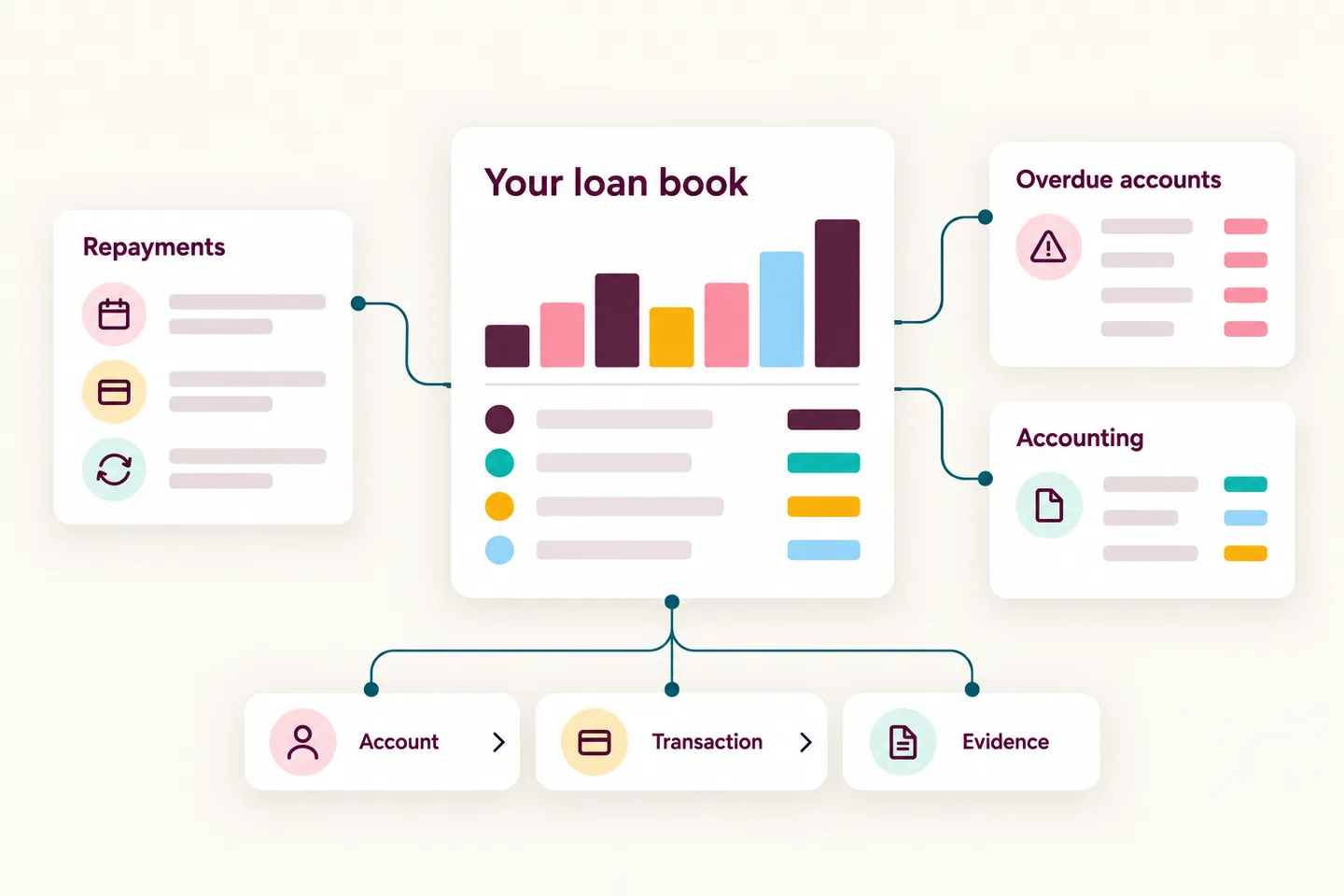
The foundation
Keep the loan record behind every answer.
Loan Management holds the schedule, receipt history and accounting entries. Reporting reads that book with agreed definitions. External data reaches it through configured and tested handoffs.
- 01The account
Approved terms, schedules and events
- 02The measure
Defined population, date and calculation
- 03The investigation
Source transactions and exceptions
- 04The decision
Lender policy and required approval
A report or an AI explanation can support a proposal. Any change to money or loan state still follows the core’s checks and required approvals. See the platform architecture.
How it works
Move from the portfolio to the evidence.
Follow the path from portfolio review to account history and accounting. In a demonstration, ask to trace the same accounts through each step and inspect the retained source record.
Begin with the position of the portfolio.
Review outstanding principal, active accounts and the findings marked for attention. Keep the reporting date beside the number when comparing periods.
- Read the population and exclusions behind each measure
- Choose an account group to investigate before changing treatment
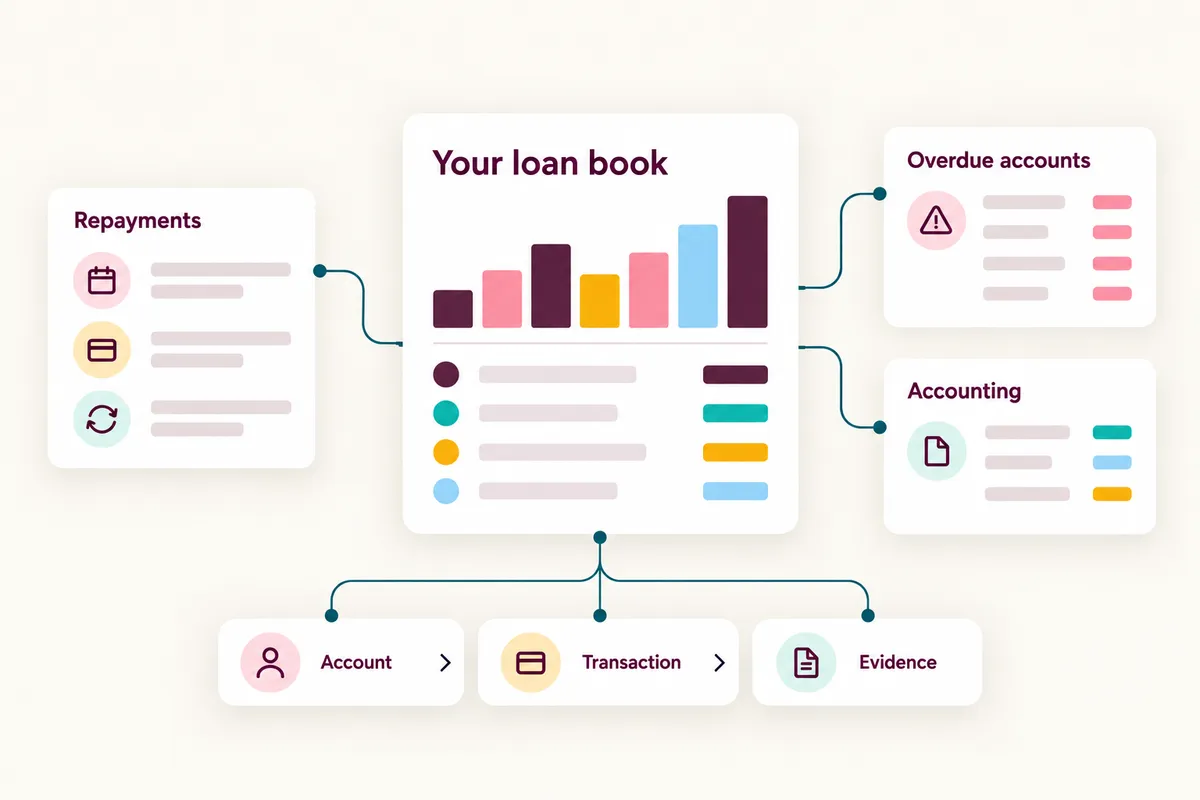
Find the accounts behind overdue exposure.
Read ageing and movement in the context of the book. A schedule-based overdue measure needs its own definition; it should not be mistaken for a regulatory classification.
- Compare the same cohort at the same cut-off
- Inspect the repayment history behind a bucket movement
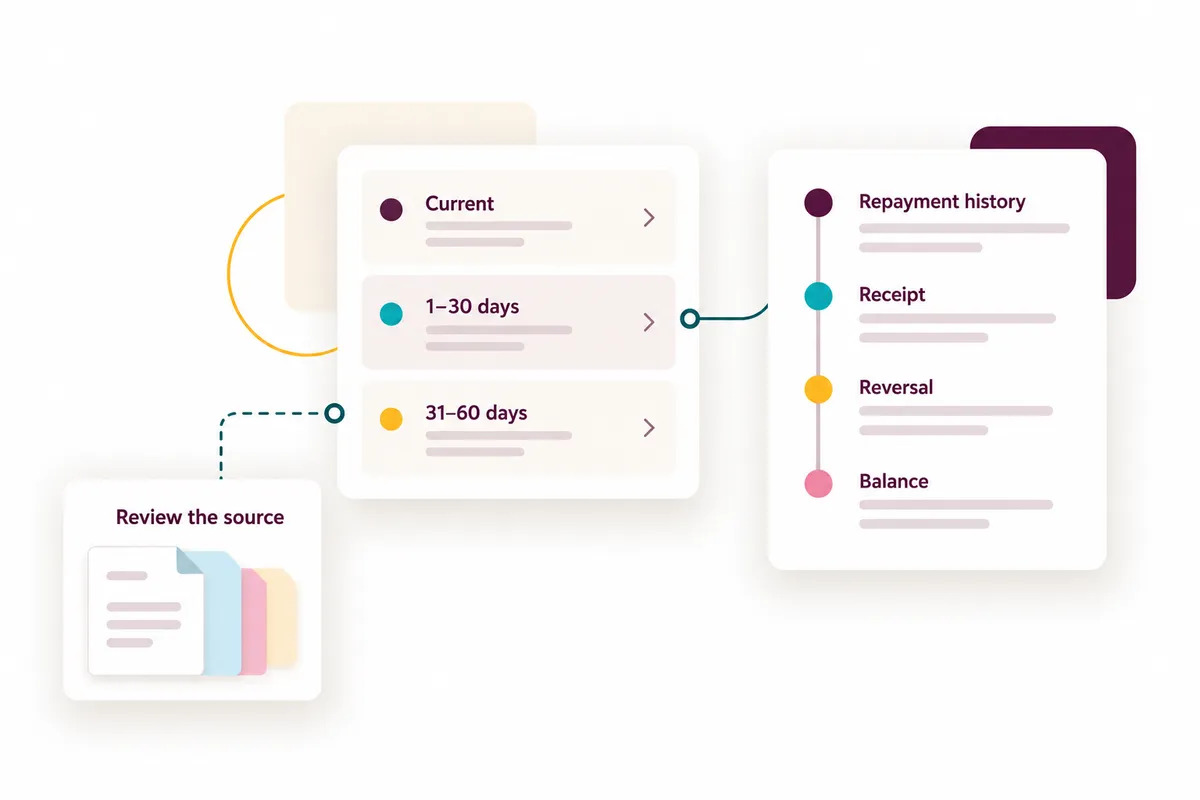
Follow the figure back to a transaction.
Finance needs to explain the balance as well as report it. Use the loan reference and journal entries to investigate a receipt, reversal or difference.
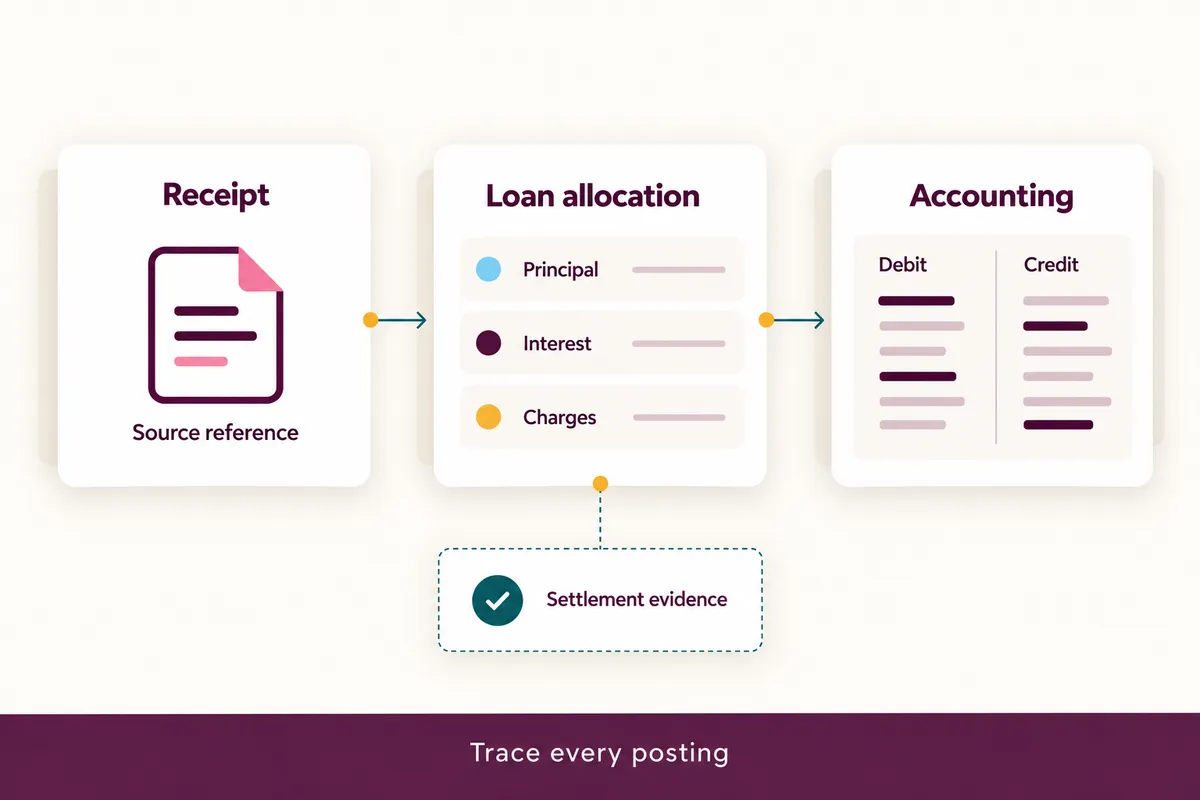
- Reconcile the source receipt, loan transaction and accounting entry
- Keep settlement evidence distinct from the posting record
Give each team a useful place to start.
Lending operations
Use portfolio balances, overdue exposure and account-level findings to choose where to investigate. Read the reporting date before comparing one period with another.
Collections leaders
Review repayments and movement between overdue buckets alongside the underlying loan history. Compare the same population and period when judging whether treatment is working.
Risk and partner teams
Review attributed loans and portfolio performance by sourcing partner. Keep the distinction between the partner that sourced a loan and the lender funding it.
Finance teams can follow receipts and journal entries on the repayment and reconciliation page. Partner attribution and fee operations are covered in Lending Partner Management. For lender-specific receipts and balances, see multi-lender servicing.
Know what the number counts.
- Principal outstanding
- Read the outstanding principal separately from interest and charges. Agree whether a report includes closed, written-off or other excluded accounts.
- Overdue exposure
- Check the ageing basis and the balance being measured. Keep a schedule-based 90+ measure separate from regulatory NPA classification.
- Collection rate
- Keep current demand and arrears recovery distinct. State which receipts enter the numerator and which dues enter the denominator.
- Bucket movement
- Follow the same accounts between reporting dates. Establish how reversals, closures and changes to the schedule affect the comparison.
The portfolio analytics guide covers metric design. The collections KPI guide explains roll rate, cure rate and promises to pay.
Bring one report. Trace it to the loans.
Use synthetic or approved demonstration data to agree an acceptance test before moving your reporting process.
- Agree the definition.
Choose the reporting date, account population and treatment of interest, charges and reversals. Write down the expected total.
- Inspect the source accounts.
Pick a dashboard figure and identify the loans and transactions behind it. Reconcile the total against the same ledger cut-off.
- Test a correction and the handoff.
Reverse a synthetic receipt, rerun the view and explain the movement. Use the report builder to reproduce your required columns, then inspect an agreed export with your finance team.
Agree any external feeds, delivery schedule and access restrictions in the implementation scope. The repayment and reconciliation workflow covers the receipt records behind these views.
Reporting and analytics questions
Scope, report building, metric definitions and the loan records behind each view.
Can an AI insight change a loan?
An insight can support investigation or a proposed action. Financial and loan-state changes still pass the deterministic core’s rules and any required approval. The lender remains accountable, and the record retains the decision and its evidence.
Is reporting part of Lokta Loan Management?
Yes. Reporting and analytics are part of Lokta, the agentic loan servicing platform. Loan Management holds the account and accounting records behind portfolio and collections views. These are capabilities within the platform.
Can we build our own loan reports?
Lokta includes a self-serve report builder. During evaluation, use a report your team already relies on to agree the available fields, filters and output. Confirm the export format, access rules and any external-data requirements before implementation.
Does 90+ days past due mean the same thing as NPA?
A dashboard measure must state its calculation. A schedule-based 90+ exposure measure and a regulatory asset classification can use different rules. Check the reporting date, population and applicable classification basis before comparing them.
Can reporting be used with our existing LOS?
Keep your existing LOS for origination and credit decisions. Approved loans reach Lokta through an agreed handoff or a reconciled migration. Reporting then uses the book held in Lokta. External feeds and provider connections are configured and tested for the deployment.
Work through the report your team relies on.
Describe the decision it supports, where the figures come from and what takes manual work. A founder can help define what a demonstration or pilot needs to prove.